


Introduction
This creative-critical article emerges from an ongoing collaboration between environmental scholar and strandlooping practitioner Aaniyah Martin, multidisciplinary artist Amy Rusch, archaeologist Sarah Wurz and science communicator Meghan Judge, whose different practices converge around Klasies River Cave on South Africa's southern coastline. Bringing together archaeology, environmental humanities, artistic research and feminist theories of care, we ask what forms of intelligence become possible when the cave is encountered not only as an archaeological archive but as a living coastal waterscape. Through strandlooping, material making, hydro-rugging, sedimentary practices and speculative dialogue with Artificial Intelligence (AI), we explore how embodied, relational and more-than-human ways of knowing unsettle dominant understandings of intelligence grounded in extraction, optimisation and classification. Rather than presenting AI as either a solution or an adversary, we use it as a speculative interlocutor through which the limits of computational intelligence become visible when placed in conversation with the ocean, sediment, ancestral presence and practices of care. The paper first introduces the methodological and conceptual foundations of this collaboration before moving into a series of creative encounters between and with Aaniyah and Amy that reimagine Klasies as a site where intelligence resides not only in archaeological evidence, but in relation, return and reverberation.
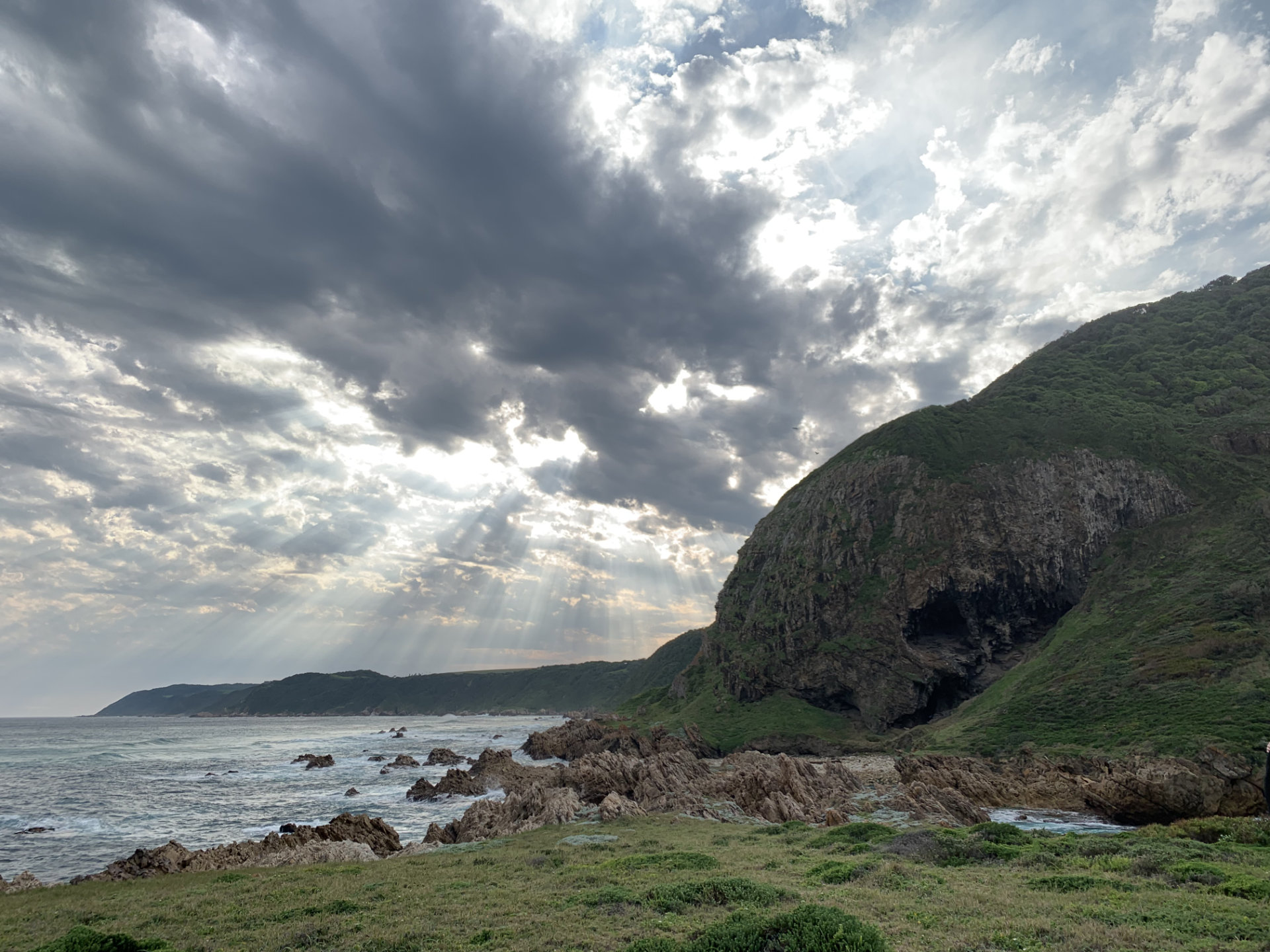
Klasies River Caves (Figure 1), on the Tsitsikamma coast in the Eastern Cape Province of South Africa, is one node within a dense constellation of coastal sites—Pinnacle Point, Blombos Cave, Die Kelders, Ysterfontein, Elands Bay, Hoedjies Punt, Peers Cave and Klipdrift shelter—through which narratives of early Homo sapiens have been assembled, indexed and circulated globally (Wurz 2013; van Wijk et al. 2019; Parkington 2006; Wurz et al. 2022). These sites are frequently mobilised as evidence of human intelligence: cognition inferred through stone tools, ochre use, shell middens and subsistence strategies embedded in stratified deposits (Wurz, 2013; van Wijk et al., 2019). Yet the coast itself—the tides, sediments, erosion and labour that sustain these sites—rarely figures as an active epistemic presence in how intelligence is understood.
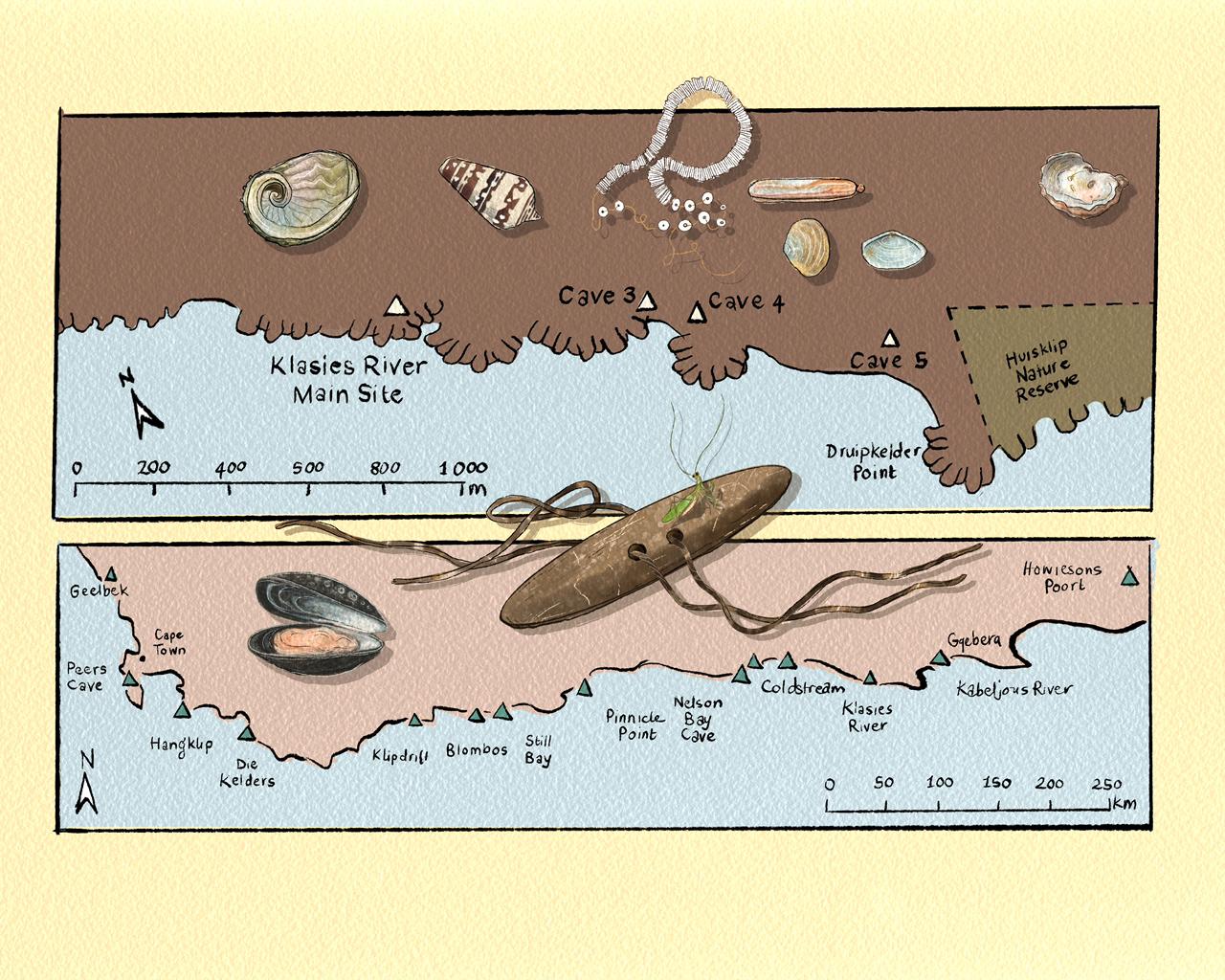
Figure 1: Map drawn of the south coast showing Klasies River Caves in relation to other significant archaeological sites. Central to the map is an illustration of a woer-woer type aerophone excavated at Klasies, fabricated by Neil Rusch (2024) in bone to match the original (Dylan McGarry 2026).
Although this article is written collaboratively, each author enters Klasies River Cave through different histories, practices and disciplinary traditions. Aaniyah approaches the site through strandlooping, hydro-rugging (a stitching and mending methodology), and long-standing work in coastal environmental care and feminist pedagogy. Amy's practice emerges through artistic making with sediment, thread, plastic and archaeological materials, informed by years of work alongside archaeological research teams. Sarah Wurz's archaeological leadership at Klasies and Meghan Judge's work in science communication and creative environmental research provide the wider intellectual and relational context within which these encounters became possible. Throughout the paper we occasionally write from our individual practices before returning to a collective voice, reflecting our understanding that knowledge is generated through collaboration rather than singular authorship.
Aaniyah’s first invitation to Klasies did not come through an archaeological research permit, but through a request from Professor Richard Cowling to host a beach clean-up2 to honour our ancestors (all of humans and more-than-humans) through an act of care. Care is not understood here as an individual ethic of kindness but as a relational and political practice (Tronto 2015; Puig de la Bellacasa 2017; Tronto 2023). Following feminist scholars of care, we understand care as the ongoing labour required to sustain relationships between people, places, histories and more-than-human worlds. Care becomes both a methodological orientation and a mode of knowledge generation.
The proposed encounter of a ritualised beach clean-up which includes strandlooping, hosted by The Beach Co-op, understood the site as relational rather than extractive. Access to one of the world’s most significant archaeological sites was denied on the basis of private land ownership, revealing how deep time is governed not only by geology, but by contemporary regimes of enclosure, authority and our ongoing Apartheid legacy (Barad 2017; Martin 2024c). This refusal revealed how settler colonial regimes exile certain bodies, practices and relations to the past while continuing to be structured by them. As Tuck and Ree (2013, p. 642) argue, settler colonialism produces “once and future ghosts”—forms of life and labour rendered killable or illegible, yet never fully erased. At Klasies, these ghosts reside not only in ancestral bodies, but in sediment, shoreline debris, tidal rhythms and infrastructures that regulate access to deep time (Judge 2021; Shefer & Bozalek 2022; Peers 2024). What is refused returns differently, not as authorised knowledge, but as insistence. Refusal is not employed here as withdrawal from knowledge generation but as a deliberate refusal of extractive research logics that separate researcher from place, knowledge from embodiment and data from relations. Drawing on Indigenous and decolonial scholarship, refusal becomes a methodological stance that questions whose knowledge is legitimised, how it is gathered and which forms of relation are erased through dominant research practices (Liboiron 2021, p. 22).
Throughout this article, AI refers specifically to contemporary generative artificial intelligence systems, particularly large language models (LLMs) trained on vast corpora of digitised text using statistical pattern recognition. These systems generate responses by predicting probable language sequences based on previously assembled datasets rather than through embodied experience, sensory perception or situated relational engagement. Although often presented as neutral or universal forms of intelligence, LLMs inherit the assumptions, omissions and power relations embedded within their training data and the infrastructures that produce them (Benjamin 2019; Crawford 2021). Our concern is therefore not with AI as a singular technological category, nor with all computational methods, but with forms of generative AI that increasingly shape knowledge production while remaining dependent upon extractive data practices, hidden labour and systems of optimisation. By placing a large language model into speculative dialogue with strandlooping and the coastal worlds of Klasies, we do not seek to evaluate or improve AI. Rather, we use the encounter to illuminate forms of relational, embodied and more-than-human intelligence that remain resistant to computational capture.
We do not argue that AI fails because it is incapable of producing knowledge. Rather, it produces knowledge through radically different relations to the world. Large language models operate through abstraction, statistical association and prediction across digitised archives. Strandlooping, sedimentary making and hydro-rugging emerge through bodily movement, material encounter, waiting, return and care. These practices are not simply alternative methods; they enact different ontologies of intelligence. By placing them into speculative dialogue, our intention is not to determine which knows better, but to ask what each makes perceptible, what each obscures and what remains irreducible to computation. At Klasies River Cave, intelligence lingers not only in archaeological evidence or algorithmic inference, but in the ongoing relations between tide, sediment, memory, labour and more-than-human worlds.
Subsequent access to the caves was granted through collaboration with archaeological colleagues and the securing of formal scientific permission (Video 1). This transition, from refusal to authorised entry, illuminates an infrastructure of intelligence that operates across archaeology and AI alike. In each case, knowledge becomes legible only once it is sectioned, indexed, credentialed and mapped. What remains outside of these systems—ancestral presence, ritualised care, embodied labour, refusal—persists as speculative3 encounter.
This paper brings strandlooping into dialogue with material making as a counter-intelligence to such extractive systems. Strandlooping offers a different way of encountering the coastline (Martin 2024a). Aaniyah understands strandlooping as both an embodied coastal practice and a methodological intervention. Historically associated with Indigenous coastal communities of Southern Africa, strandlooping refers to moving attentively along shorelines while gathering food, stories, observations and relations (Parkington 2006, p. 9). Rather than approaching place as an object of study, strandlooping foregrounds situated, sensory and relational encounters with land-sea interfaces. As methodology, strandlooping refuses extractive modes of data collection and instead privileges reciprocity, attentiveness and learning-with place. Strandlooping resonates with feminist, Indigenous and postqualitative approaches that privilege relational forms of inquiry (Martin 2024a). Walking with the tide foregrounds movement, return and residue rather than fixed points of excavation. Strandlooping refuses the view from above that renders coastal sites as discrete data points and instead situates them within continuous geological and watery processes. Along South Africa’s shores, strandlooping becomes a method for thinking with deep time as something carried in bodies, sediments and acts of care (Parkington 2006; Bozalek 2021; Bozalek et al. 2021; Judge 2021; Shefer & Bozalek 2022; Peers 2024; Martin 2024).
Amy’s practice, particularly Witness Bank: Sedimentary Wayfinding, works with sediment remnants on paper towels gathered during the cleaning of artefacts at Klasies River in 2023; the granular residue produced through the quiet, repetitive labour that underpins archaeological authority. Using sedimentary residues from the cleaning process, the ‘waste of the waste’ becomes the guide for mark-making (Figure 2). Amy collapses temporal boundaries, using these sedimentary forms atop the reused plastic bags and thread, stitching deep human history into materials emblematic of contemporary excess. Her work refuses extraction; it stays with what remains after classification (Video 2a, b, c and Figure 3).
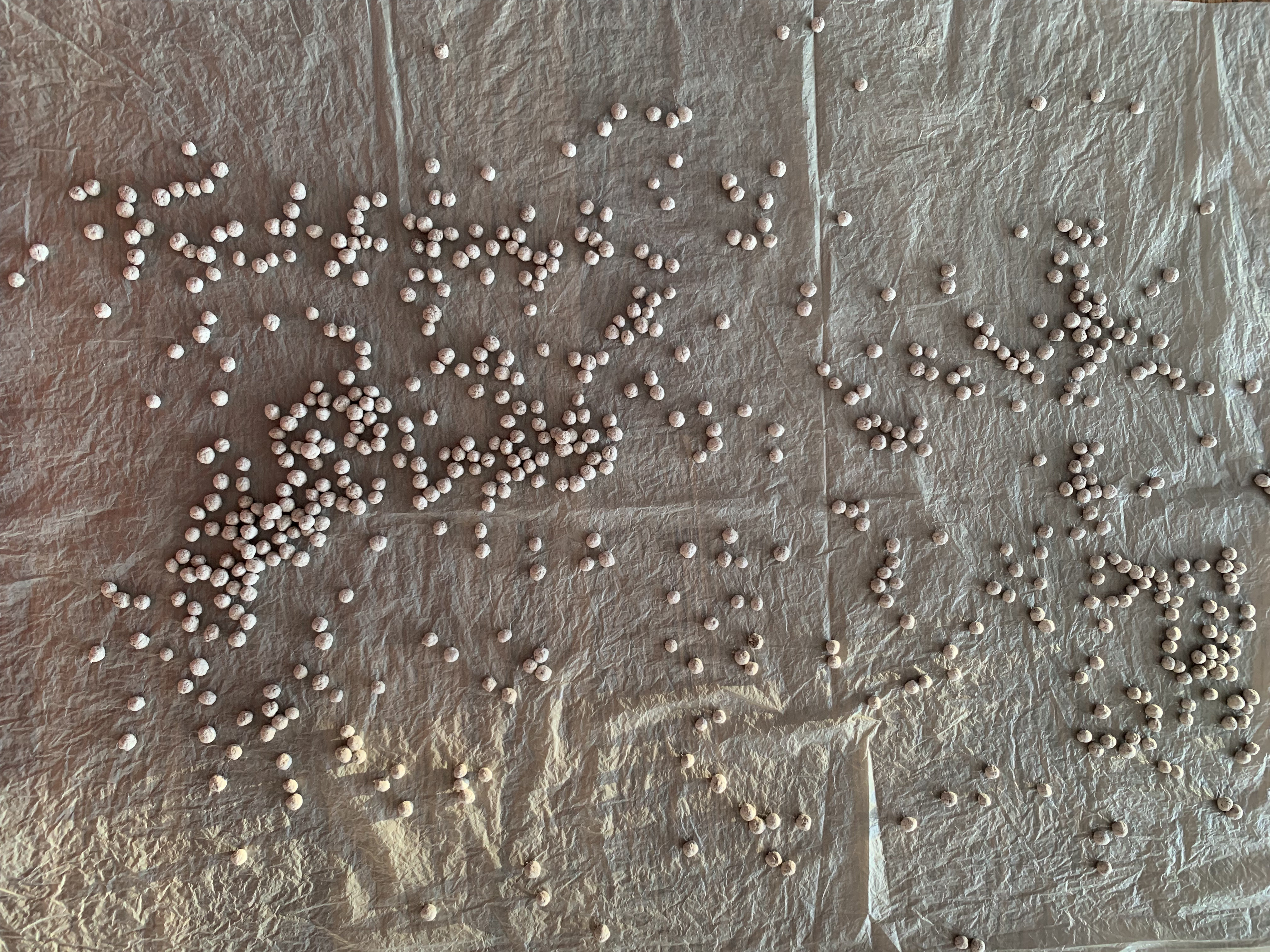
Figure 2: Sedimentary forms rolled after returning from Kalsies in 2023. These forms sit atop layers of found plastic bags.
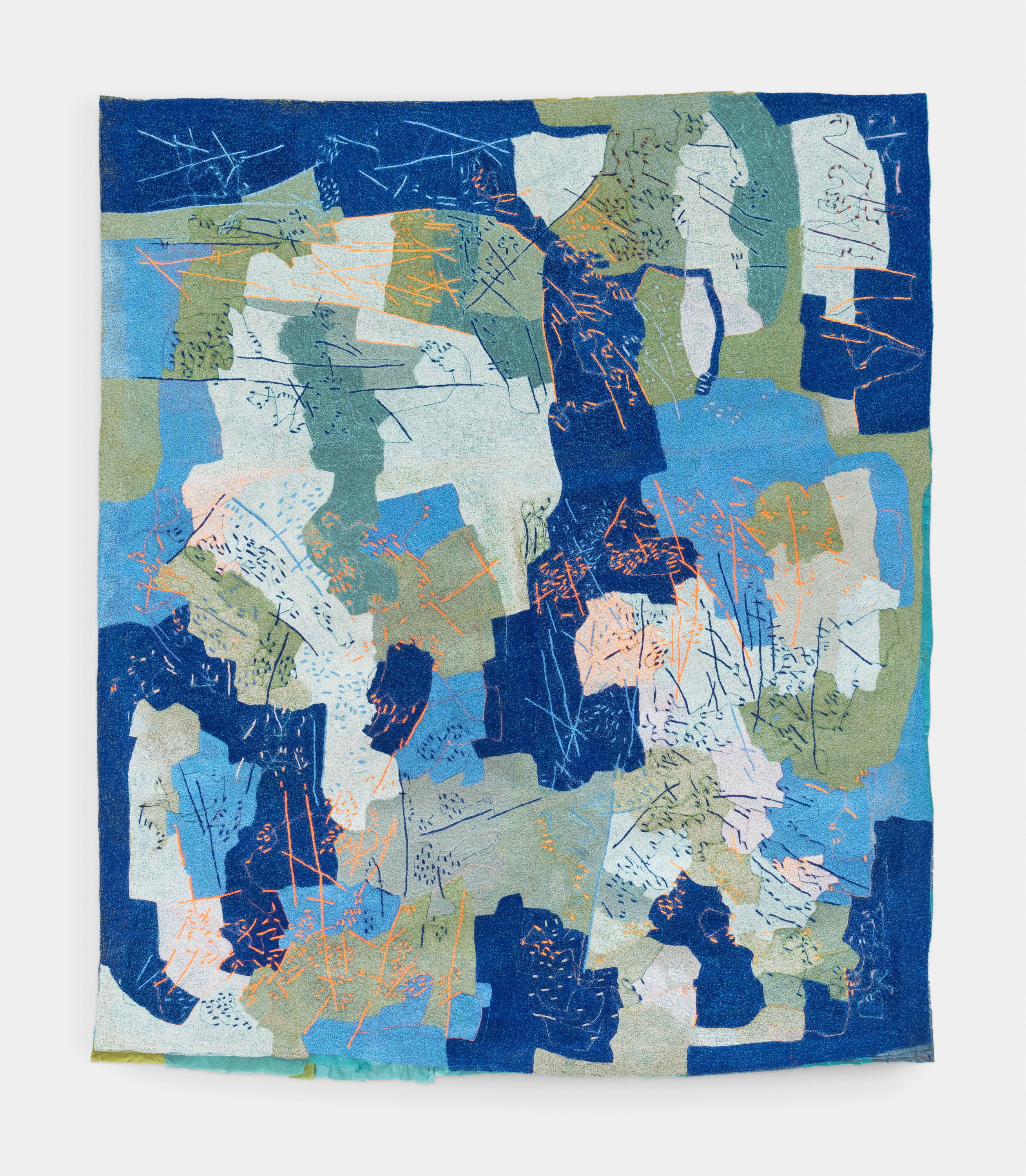
Figure 3: Witness Bank—Sedimentary Wayfinding (2025), shown in the group exhibition Terrain at Ebony Curated. Found plastic bags, thread and Klasies sediment, 109 x 93 cm.
Amy: Stitching into plastic brings something from deep beneath the surface to front of mind. What was it like 100 000 years ago? Is it possible to reflect that far back in time to early Homo sapiens? Plastic stands in stark contrast to what one sees in the archaeological deposit—stone, bone, shell, ashy hearths. Bringing sediment and plastic together helps me to think through time and also to honour all that has been.
Similarly, Aaniyah’s hydro-rugging practice, co-created with co-researchers, foregrounds water, collective labour and process over product as seen in Figure 4 (Martin 2024b). Hydro-rugging is a stitching and mending methodology: a reparative, relational method of caring-with water, place and people (Martin 2023; Martin 2024b). Its conceptual roots lie partly in thinking with musallahs (prayer mats) as sites of gathering and collective practice. Like the musallah, the hydro-rug creates a shared space through which relations are assembled and sustained. Hydro-rugging is not a technique but a process of cleaning shorelines together, stitching fragments and debris that hold stories of salt, grief, labour and relation (Martin 2023; Martin 2024b). It emerged as a research-creation practice through which participants collectively reflected on questions of ancestry, memory, care and belonging raised through encounters with water. Hydro-rugging foregrounds co-research, refusal of extractive authorship and attentiveness to what exceeds representation. Hydro-rugging stays with what is damaged, without rushing to resolution.
These practices echo what AI systems depend upon yet conceal: shadow labour. From ghost workers who clean and label training data, to the invisible work of maintaining archaeological sites, intelligence is sustained by acts of care that are rendered peripheral or expendable. Strandlooping, stitching, cleaning and hydro-rugging reclaim this labour as central, collaborative, ethical and relational. We do not understand embodiment as synonymous with walking; rather, it refers to situated sensory engagement that may take multiple forms. Access to coastal environments and embodied methodologies is shaped by differing physical and political capacities.
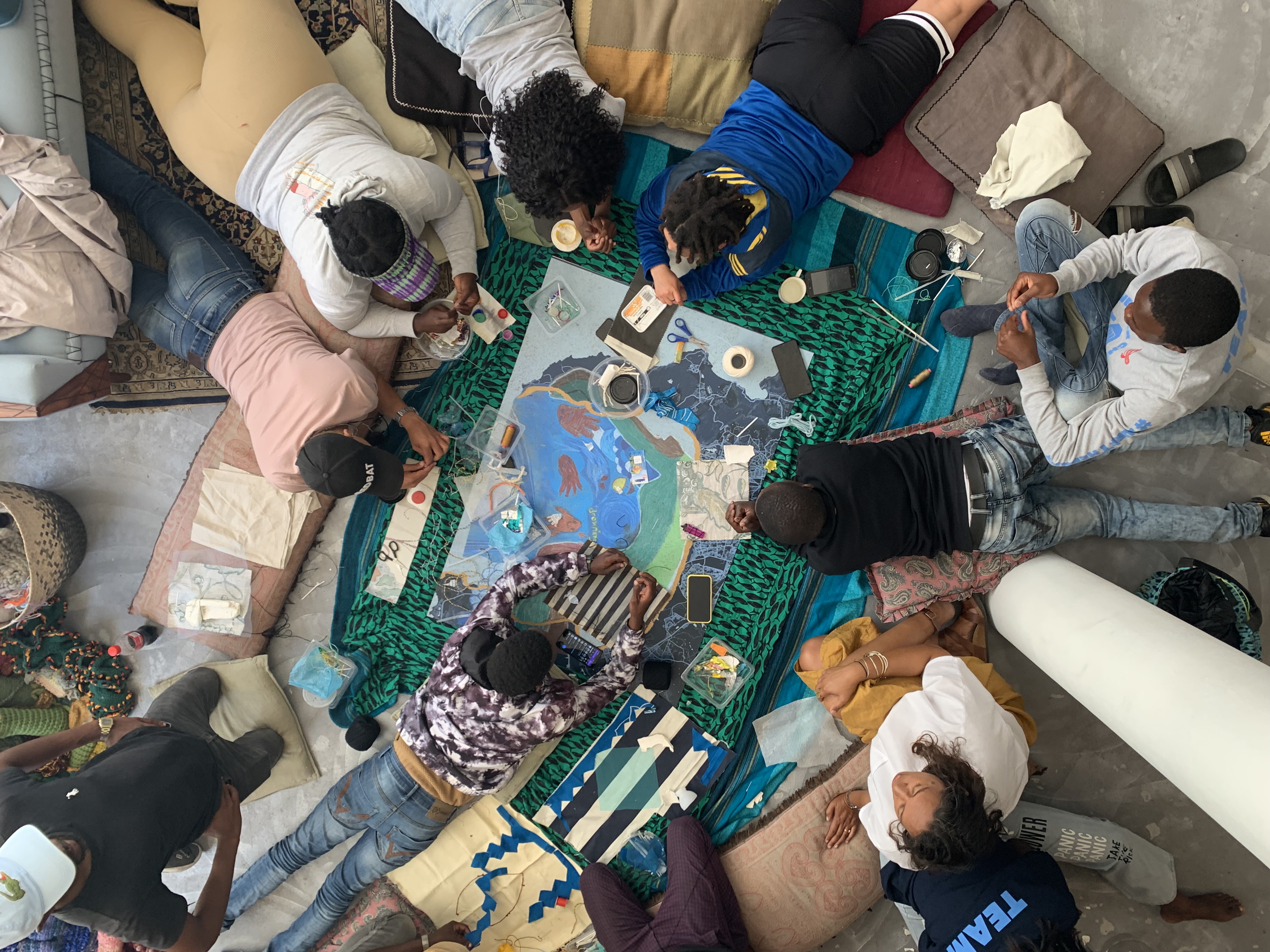
Figure 4: Hands working on the Mother Hydro-Rug, collectively, relationally, present.
Across these practices, terrain is never neutral. Coastal land, archaeological strata and bodies are shaped by colonial enclosure, extraction and displacement, yet they remain sites of resistance and regeneration. By thinking with strandlooping and making at Klasies (Video 3a, 3b), this paper argues for counter-geographies of intelligence; ones that honour geological time, bodily presence and ancestral care, and that refuse optimisation in favour of relation, opacity and response-ability (Bozalek and Zembalys 2017).
Pathways to and from Klasies River Cave: Strandlooping as Relational Intelligence
“the distant past resounds with echoes, and it is hard to know at what depth these echoes will reverberate and die away” (Bachelard 1969, pg xvi).
The ocean that edges Klasies also binds it to other sites along the southern coast. It is connected through currents to places such as Buffels Beach in the Cape Point Nature Reserve. Amy and Aaniyah strandlooped at Buffels as a deliberate act of relational listening—a way of engaging place, not through extraction or mapping, but by listening with our feet (Martin 2024a).
This mode of engagement resonates strongly with calls for ‘slow’ scholarship, which challenge the logics of speed, productivity and extraction that increasingly structure academic knowledge-making (Bozalek and Zembalys 2017; Bozalek 2021, Bozalek et al. 2021). Slow scholarship insists that attentiveness, care, waiting and return are not obstacles to knowledge, but conditions of ethical and situated thinking. Strandlooping enacts this materially. Intelligence here does not reside in efficiency or output, but in duration, repetition and bodily presence; and in staying with place long enough for relations to surface.
On a previous visit to Buffels, Aaniyah found a discarded beer bottle from the 1970s; an artefact of settler leisure and coastal consumption. This bottle had already travelled with Aaniyah to Klasies in November 2025, where she filled it with salt water from the Cape at Maanskyn Baai (Moonlit Bay)4, allowing it to hold both time and tide. Earlier visits to Klasies in 2023 and 2025 had already established a rhythm of return rather than arrival. During our strandloop at Klasies in 2025, Amy had collected a sea sponge. Its porous body absorbed salt, sediment and seawater; a living archive of place. At Buffels, we brought these materials into relation. The sponge, carrying the residue of Klasies, was soaked with ocean water from Buffels and placed into the beer bottle. This act allowed sites to contaminate and merge with one another (Ulmer 2020).
This exchange echoes earlier material practices at Klasies, where sediment residue from cleaning archaeological artefacts in 2023 was absorbed into paper towels and later transformed into bead-like forms or seeds (Figure 5). These processes attend to residue rather than artefact; to what remains after sanctioned knowledge production. They foreground maintenance, soaking and waiting as forms of labour that resist extraction and acceleration.
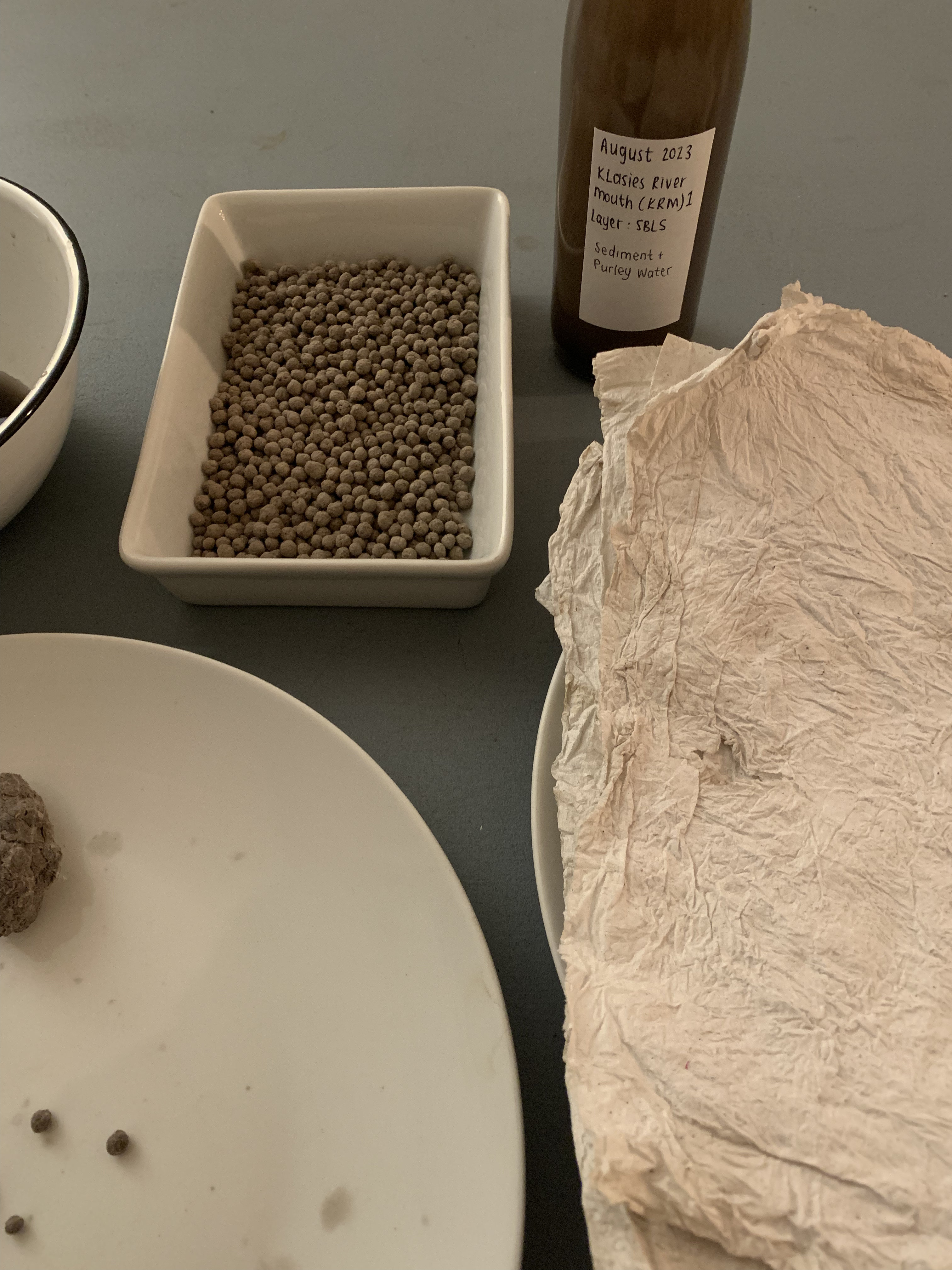
Figure 5: Amy’s first process of rolling sedimentary forms using the wash-away sediment that remained after cleaning artefacts excavated at Klasies; a layer in time from about 100 000 years ago. Thousands of sedimentary forms were rolled between fingers, over many months. At that time it was mostly unclear what they might become. Now, these forms/beads/seeds become the guides for mark-making. The separated sediment comes together once more as they roll and find their place on the plastic surface. Dr Cynthia Larbey describes: “With silty sediments there’s a positive electric charge between the silt platelets that make them stick together. It’s the positive electric charge that holds those platelets in the silt together.” (Larbey 2023, personal comment)
In contrast to AI systems that depend on clean inputs, labelled data and invisible human labour, this practice embraces saturation, uncertainty and entanglement (Barad 2007; Muthien and Bam 2021; Peers 2024). The bottle does not contain data; it holds relation and cannot be optimised or scaled. If AI seeks to model the world through abstraction and prediction, strandlooping insists on proximity and return. It is a way of knowing that emerges with the whole body moving alongside the sea.
Subsequent to strandlooping and gathering ocean water with the Klasies sea sponge, a further relationality emerges. The ocean’s water is used to soak the discarded paper towel, which has the Klasies sediment embedded in it. We remember strandlooping at Klasies in 2025 and our encounter with an octopus that swam over in curiosity to greet us at the edge of a rockpool. This exchange through walking and swimming brings Klasies and Cape Point into relation. As we roll new sedimentary forms with residue and ocean water, our hands access deep time through the Witness baulk and the artefacts we cleaned. Is it possible to think back 110 000 years to the layer of time in which we worked?
We find Bachelard’s language and insights helpful, as he speaks of listening rather than interrogation (Bachelard 1969, p. xvi). He identifies a distinctive quality to reverberation, which links reverberation to time: “the distant past resounds with echoes, and it is hard to know at what depth these echoes will reverberate and die away” (Bachelard 1969, p. xvi). Reverberation thus carries time without resolving it, holding multiple temporalities in suspension rather than extracting them into discrete units. Derrida describes hauntology as a condition in which past, present and future are entangled rather than sequential (1994, p. xix). In this sense, reverberation is not a trace of what has passed, but a vibration of what might yet have been, and what still presses upon the present. At Klasies and Buffels, sound does not recall the past; it folds time, making multiple temporalities audible at once.
The wind caught the mouth of the bottle as we prepared to draw water from the ocean by squeezing the sea sponge from Klasies to release water into the bottle found on this shore. The bottle began to sound a low, wavering tone produced not by intention, but by relation. Wind, glass, salt and air entered into resonance. The bottle sang5. Read as a speculative encounter, this moment stages a collision between computational and coastal intelligence. Where the large language model depends on signal clarity, discrete inputs and legible output, the bottle produces sound without instruction, and without meaning that can be stabilised. The ocean does not contradict the machine; it exceeds it. Intelligence here emerges not through prediction, but through resonance, interruption and relation.
In this moment, reverberation was not metaphorical; it was felt in the hands holding the bottle, in the vibration of sound passing through glass6, and in the shared pause and shriek of glee that followed. The sound attuned us. It made audible a relation between Klasies and Buffels, between past and present, between sedimentary time and lived encounter. Like the sedimentary forms and soaked residues we continue to work with, the singing bottle held time without fixing it. Against the clean, fast and speedy abstractions required by computational intelligence, reverberation here functioned as a mode of relational knowing (Simpson 2017; Bozalek 2021); one that resists capture, persists through vibration and fades only slowly, long after the sound itself has ceased.
Pathways to and from Klasies River Cave: Aaniyah
These clean-ups were never only about waste removal. They functioned as pedagogical encounters and embodied archives, where knowledge emerged through repetition, conversation, and shared labour rather than extraction (The Beach Co-op 2025).
My arrival at Klasies is not a singular event but the result of decades of strandlooping along the False Bay coastline and beyond (Martin 2024a). My interest in waste, care and coastal labour first took form at Muizenberg. I reached out to scientific networks to ask whether there were projects that might allow for meaningful engagement with conservation beyond extractive research practices. The project proposed by ornithologist Professor Peter Ryan stood out because it was local and collective: cleaning the rocky shore, collecting data and learning to read the intertidal zone together (Wiedeman et al. 2020).
What emerged from this was a monthly new moon clean-up ritual, organised around tidal rhythms. We cleaned the rocky shore, logged debris and learned collectively about plant and animal life in the intertidal zone (Martin 2019; Munro 2020). Over time, this practice extended to sandy beaches, and the non-profit organisation, The Beach Co-op, was founded. These clean-ups functioned as pedagogical encounters and embodied archives, where knowledge emerged through repetition, conversation and shared labour rather than extraction (The Beach Co-op 2025).
This labour—bending, lifting, sorting, recording—is often rendered invisible within dominant environmental and scientific narratives. Yet it is precisely this form of shadow work that sustains conservation datasets and public imaginaries of environmental care. It is unpaid, feminised, community-based and cyclical. Through these practices, waste became both material and method: plastic fragments tracing global extractive economies, fishing debris mapping industrial histories and micro-objects accumulating as evidence of what the ocean carries but cannot metabolise (Martin 2024c).
Hydro-rugging is the process of understanding waste as both material and method and is fundamentally collaborative (Video 4). Rather than positioning the Mother Hydro-Rug as the product of an individual maker, we understand it as an archive of relations. However, we acknowledge that not all contributors are named individually, but that the methodology depends on collective labour (Figure 6).
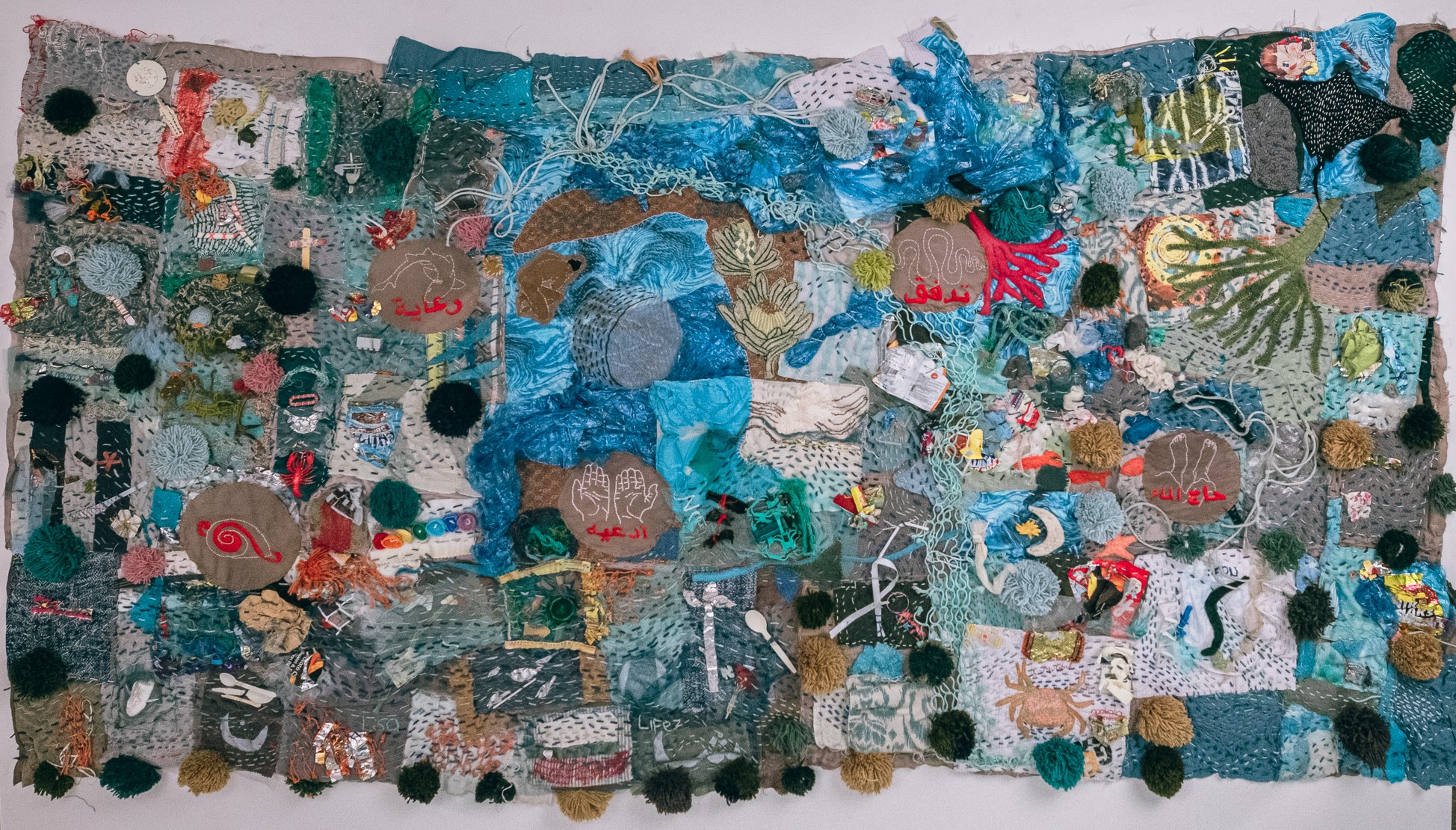
Figure 6: Mother Hydro-Rug in its current form, 2021-ongoing, 267cm x 140cm. Layers of discarded cotton cloth dyed with Protea Nitida, with found plastic objects from beach clean-ups spanning multiple years stitched together with thread. This piece is an ongoing co-creation with co-researchers and makers.
Although the initial proposal to host a ritualised beach clean-up did not unfold as imagined, it opened a longer engagement with Professor Sarah Wurz7, shaped by permissions, institutional mediation and an understanding that Klasies demands a different pace of encounter. The shoreline near Klasies revealed a profound temporal dissonance. Contemporary debris accumulates alongside ancient shell middens, often described archaeologically as refuse (Parkington 2026), complicating distinctions between waste, archive and care. At Klasies, waste refuses to remain external. It becomes sediment. It becomes record. This encounter sharpened my critique of extractive epistemologies that are scientific, colonial, and increasingly algorithmic and that seek to categorise, abstract and render legible without accountability. AI systems, trained on vast datasets and sustained by invisible ghost workers, depend on similar logics of separation: between data and labour, intelligence and care, optimisation and consequence. These questions are inseparable from histories of racialised labour. Across colonial and apartheid contexts, Black and Brown bodies have frequently provided the labour that sustains scientific, environmental and archaeological projects while remaining absent from official accounts of knowledge production. Attending to embodied practices such as strandlooping and hydro-rugging therefore also requires attending to the racialised histories through which labour, expertise and authority have been differentially recognised. Strandlooping and hydro-rugging insist on presence, repetition and bodily labour that leaves traces in muscle, skin and memory (Martin 2024a, b). Unlike algorithmic systems that promise total capture, coastal practices teach through erosion, loss and refusal. Arriving at Klasies, then, is not about producing new data or claiming proximity to deep time. It is about situating myself within a lineage of coastal care practices that remain largely unseen, yet without which no future intelligence, artificial or otherwise, can endure.
Pathways to and from Klasies River Cave: Amy
From this perspective, making is not the execution of a preconceived form, but a way of thinking-through-doing, where knowledge arises along lines traced by walking, weaving, stitching, drawing, and handling materials (Ingold 2015, p.54).
My entry into archaeology, and pathway to visiting Klasies River Caves, probably began before I was born. I have various ancestral links to the field of archaeology, but the strongest pull has been my father’s work in archaeoacoustic research. In 2013, on a long drive to the Eastern Cape, we dropped him on the dirt road to Klasies River Cave. He was interested in a particular bone pendant, and after making a replica and spinning it, microscopic use-wear analysis made clear that the original artefact had been used not only as a pendant, but also as an aerophone (Kumbani et al. 2019). My first indirect encounter with Klasies was not through excavation but through the translation of material into sound.
A decade later, in August 2023, I made the steep walk down to Klasies for the first time, alongside Aaniyah. Our connection had been suggested by a mutual friend who sensed an alignment in how we each work with waste and the ocean. We first met in 2017, strandlooping with a group along Milnerton Beach; bending, collecting and sorting at the pace of the coastline. That day we gathered hundreds of plastic earbud sticks washed through stormwater systems into the sea, and back again onto the waterline. That strandlooping set a thread of thought in motion, which, six years later, became Lines for Listening (2023).
The work is made from thread and found plastic earbud sticks, cut, reassembled and stitched into linking lines (Figure 7). These fragments function as timekeepers and prompts to listen; pixel-like markers that echo stratigraphy in the witness baulk at Klasies. Hand-stitched and open-ended, the work carries the sense that it could continue growing indefinitely, looping like sedimentary layers cycling through time. Once noticed, these blue fragments appear everywhere. Strandlooping with waste materials of the present is, like the accumulation of sediment, never complete (Parkington 2006).
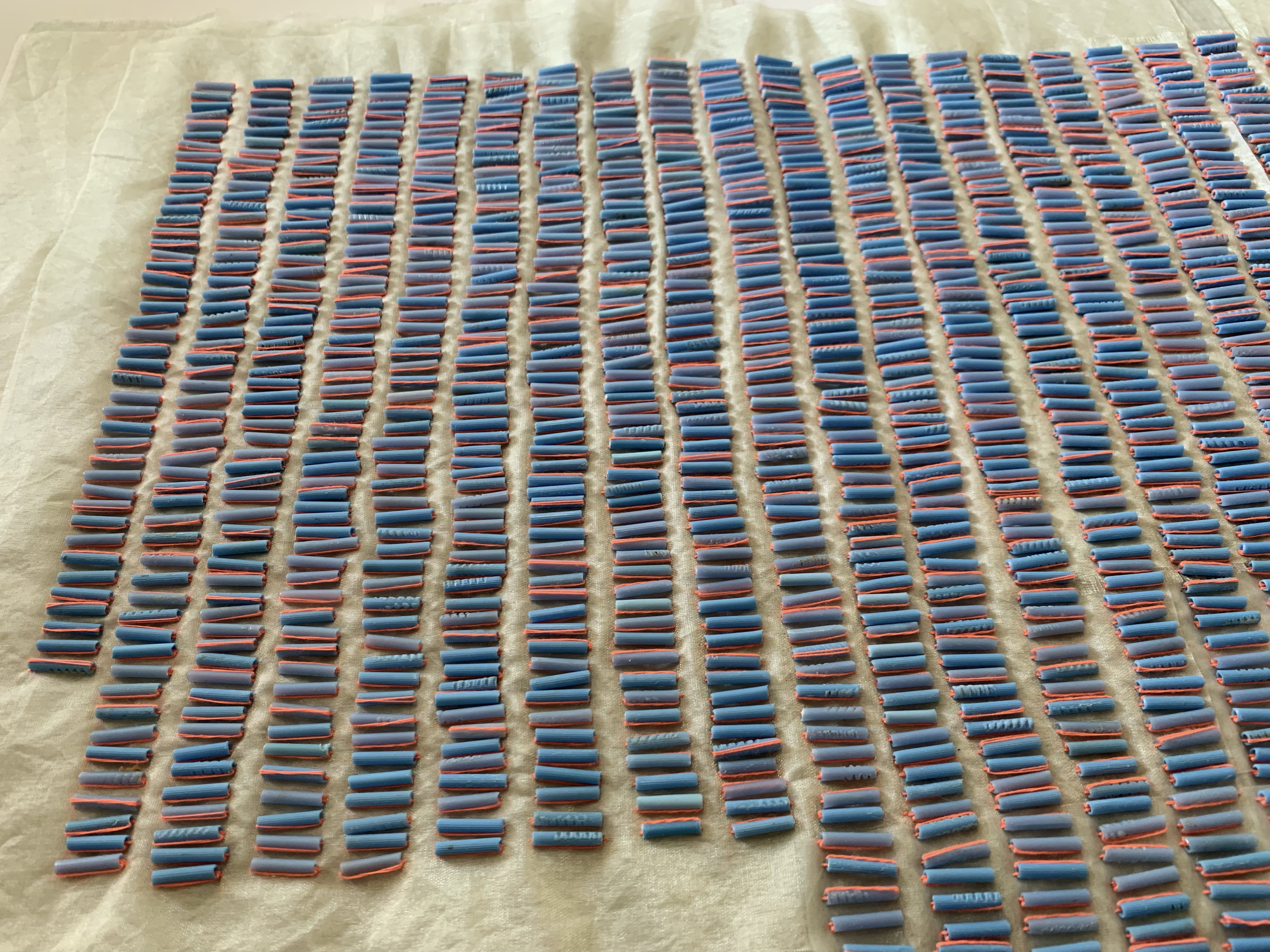
Figure 7: Lines for Listening, 2023 Thread and found plastic earbud sticks gathered on beaches and streets of Cape Town 46,5 x 78 x 3,5 cm.
Plastics gathered from beaches have been described as “traumatized plastics” (Nash 2022): exposed, weathered and made brittle by time (Karim 2023). Working with them demands a careful, attentive touch. As I stitch, my senses extend outward; these materials, shaped by exposure, become precious through duration.
That first encounter with Aaniyah now reads as an ellipsis; a pause holding the conditions for later convergence. What preceded it is also important. In 2017, I was commissioned to make replicas of early human artefacts for The Origins of Early Southern Sapiens Behaviour exhibition8, including engraved Blombos ochres, lithic tools, bone awls (Henshilwood and van Niekerk 2020), and fossils from Klasies River (Rightmire and Deacon 1991). The work involved symbolic mark-making and prolonged proximity to early human remains; an experience undertaken with care, humility, and uncertainty (Henshilwood et al. 2009; 2016; 2018; Rusch 2025).
Each act of replication reminds me that looking closely changes the looker. Making becomes a way of seeing-with, drawing me closer to the gestures and techniques of early makers. The process does not move forward in time but oscillates, much like the oceanic movement connecting Buffels Beach and Klasies.
This desire for proximity led me to archaeological fieldwork: Klipdrift Shelter in 2018, followed by Blombos Cave in 2019 with Professor Christopher Henshilwood, Dr Karen van Niekerk and their research teams. Two encounters with time proved formative. The first was stratigraphy: time rendered as layered sediment and embedded artefacts, linear and sequential. The second disrupted this linearity. Walking below Klasies, I encountered thousands of plastic nurdles (the raw materials from which plastic objects are made) scattered across the sand, lying beside traces of deep human history. Past and present were not separated by distance, but sat adjacent. Time revealed itself as non-linear.
I began practising art full-time after working at Klipdrift, Klasies and Blombos—sites where early Homo sapiens first made symbolic marks. My entry into art thus came through the earliest marks on this continent. Plastic, likely to become the primary artefact of our own time, now enters my work alongside sediment. Stitching draws thread from below to the surface, making visible what would otherwise remain buried (Video 5). Ancient sediment and contemporary waste coexist without resolution, collapsing temporal boundaries.
This concern with memory, distance and material witnessing extends into Sedimentary Wayfinding (Process 4), exhibited as part of Collected Memory in 2025 (Figure 8). Here, wayfinding operates not as navigation toward a destination, but as a practice of attunement that moves through material, memory and place without resolution. Memory is not treated as fixed or archival, but as something that shifts and re-forms as it circulates through bodies, objects and matter, operating through fragments, assemblages and echoes rather than linear progression (Moloi 2025).
Working with sediment and found plastic, stitching becomes a method of wayfinding across temporal strata. Threads trace paths between deep human history and contemporary environmental degradation, not to reconcile them, but to hold them in uneasy co-presence. By embedding sediment gathered during the cleaning of artefacts at Klasies into synthetic material, temporal boundaries collapse: then and now, endurance and excess, coexist without hierarchy or closure. Wayfinding here is not about orientation or mastery, but about staying with uncertainty and allowing materials to guide attention and thought as time remains fluid, permeable and unresolved.
Inherited threads, from my maternal and paternal grandmothers, great-grandmother and great-aunt, are integral to this practice as they carry forward a lineage of making. What remains unresolved is central. What sits in our bodies, just beneath the surface of skin, without our full awareness? How do we access these codes and patterns? As time passes and I keep working with my hands and making practice, I’m amazed when looking back at what reveals itself with time, retrospectively. When the thinking mind recedes, the making body seems able to reach elsewhere—into something held, carried and transmitted through matter itself. As Ingold suggests, life unfolds through correspondence rather than closure, through lines that loop, fray and rejoin (Ingold 2001; 2015). In this sense, the work remains open as an ellipsis rather than an endpoint where memory, time and material continue to correspond without settling into final meaning.
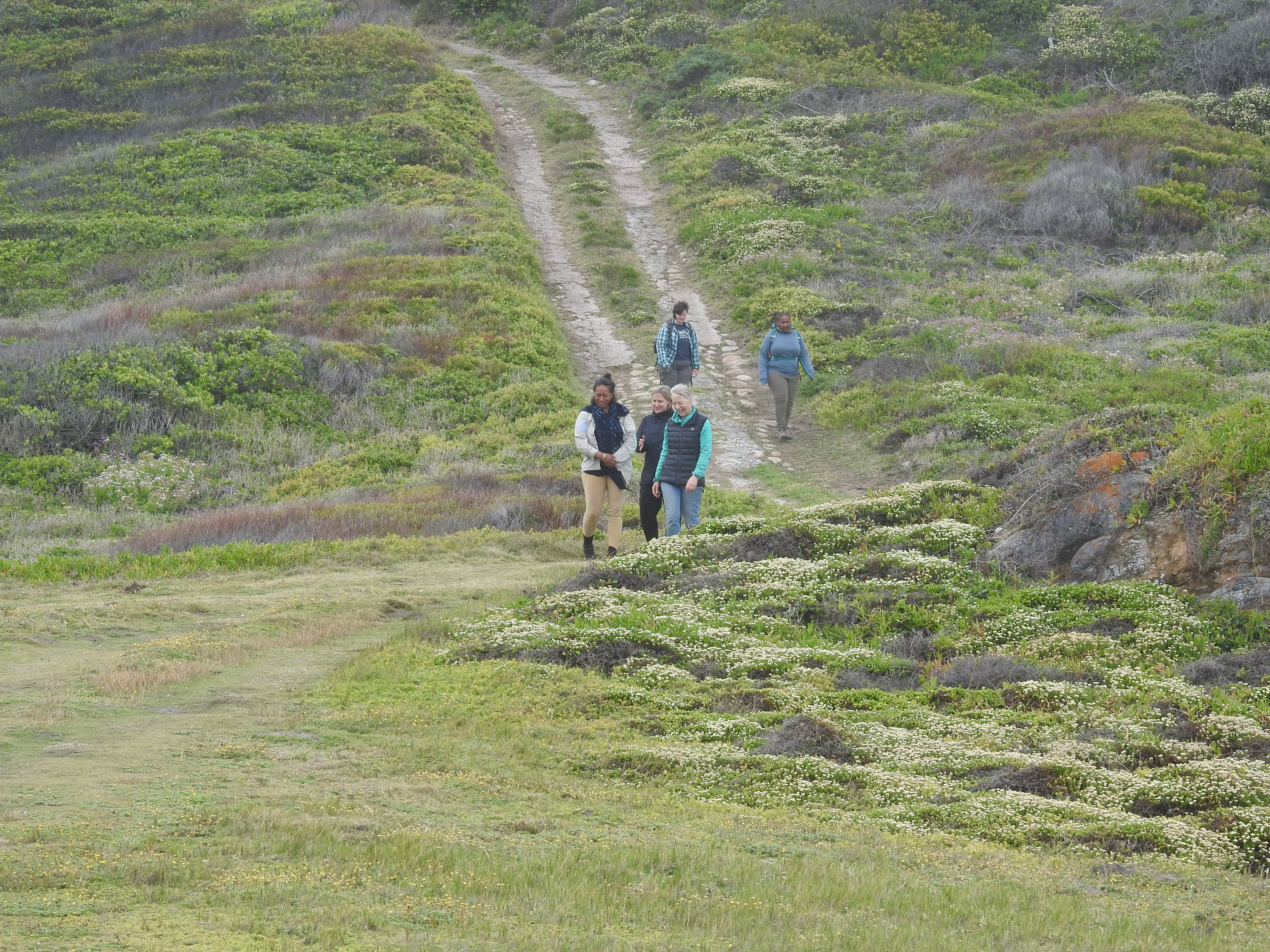
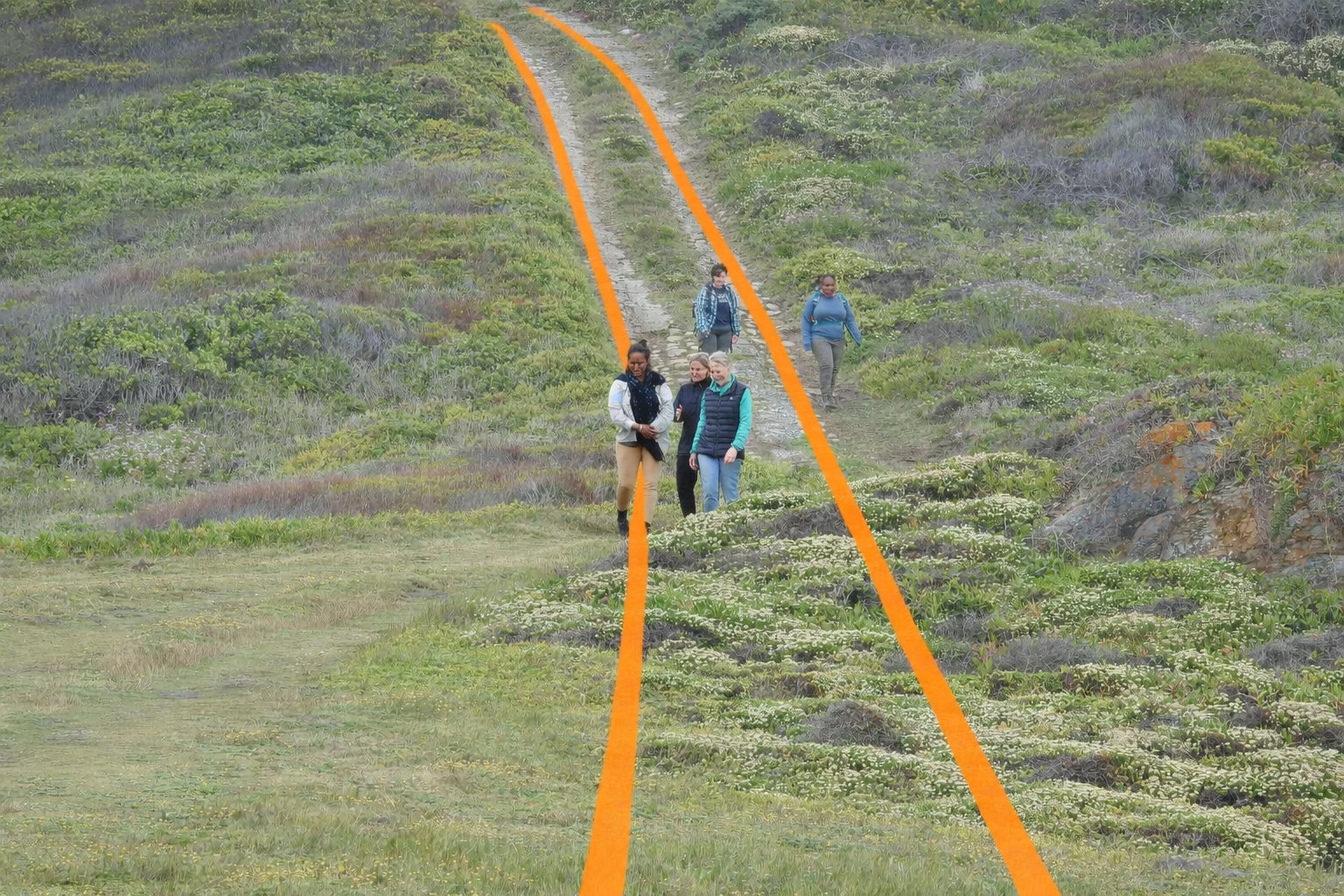
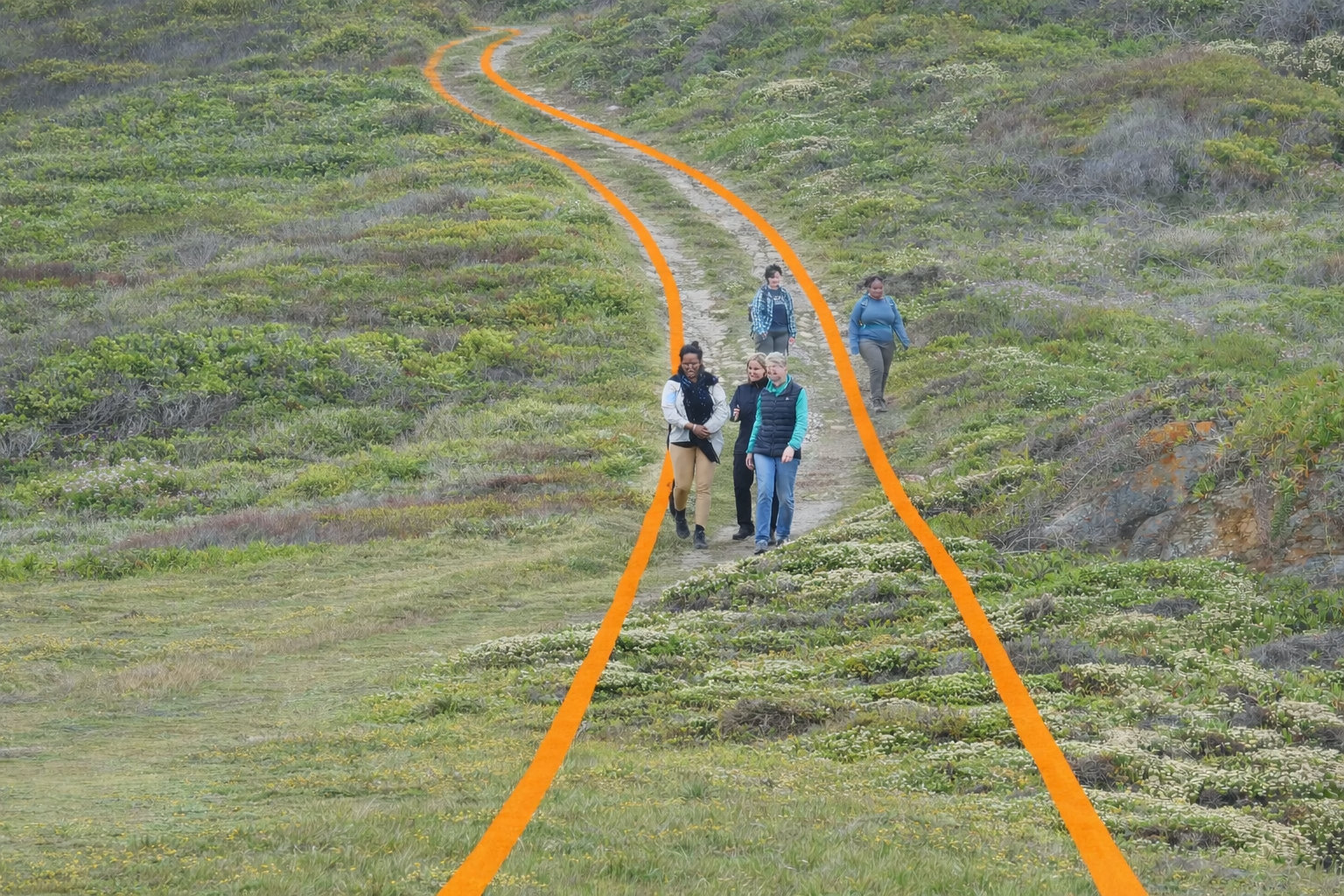
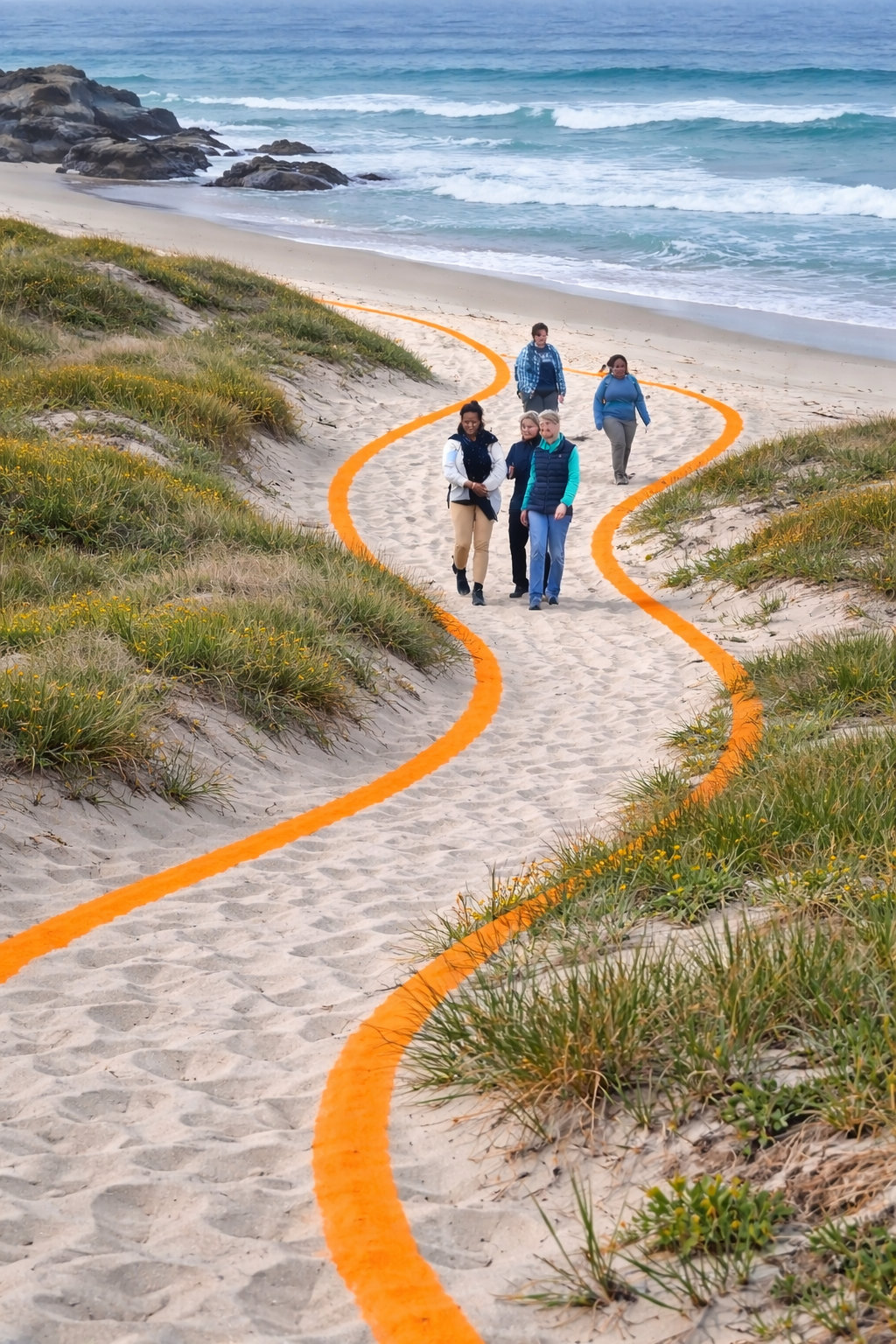
This tension between computational and relational intelligence became particularly apparent when we experimented with a generative image model using a photograph of standlooping (Figure 9). We asked the model to draw pathways across the work through a sequence of increasingly specific prompts: first to add road markings, then gentler lines and finally to create a path ‘as if strandlooping’. The progression is revealing. While the system readily generates visual approximations of movement, its first responses rely on the familiar logics of infrastructure, direction and optimisation. Only through repeated prompting does the language of strandlooping begin to influence the image, and even then it remains an aesthetic simulation rather than an embodied practice. The sequence is not presented as evidence of AI's failure, but as an illustration of the different conditions through which computational and relational intelligences operate. One generates probable visual forms from patterns in training data; the other emerges through walking, waiting, listening and becoming accountable to and with place. The iterative prompts themselves become another kind of tracing, echoing the stitched lines of Sedimentary Wayfinding, yet revealing that the appearance of a path is not the same as the relational practice of finding one's way.
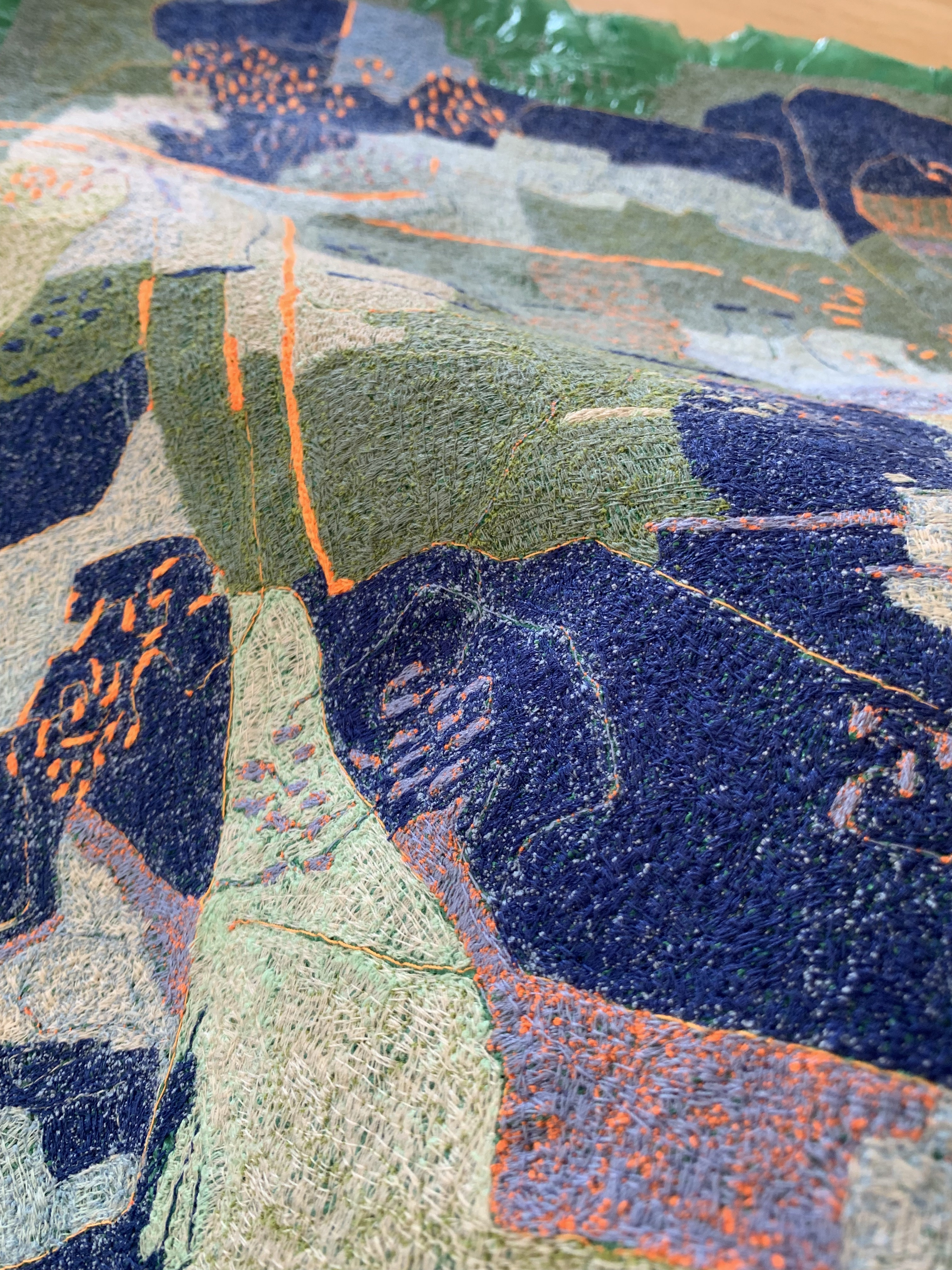
Figure 8: Detail of Sedimentary Wayfinding (process 3), 2024. Found plastic bags, thread and Klasies sediment 69 x 69 x 4,5 cm.
Haunted Infrastructures: Computational Intelligence and the Refusal of Closure
Hauntology describes a world in which past, present, and future are entangled rather than sequential, and where what matters is not what was, but what continues to press upon the now (Derrida, 1994).
Computational intelligence is often framed as future-facing—adaptive, predictive and forward-moving. Yet its infrastructures are deeply haunted. Large language models and other AI systems are trained on archives assembled through colonial, extractive and racialised knowledge regimes, while simultaneously disavowing these conditions of possibility (Crawford 2021). What appears as optimisation or prediction relies on managing the past, which renders certain lives, labours and relations disposable, while smoothing over the violence that makes large-scale data accumulation possible.
At Klasies, haunting is not abstract. It is spatial, bodily and materially encountered. In 2023, we strandlooped along the beach with coastal archaeologist Carl Holmes, and walked inland, moving through a dense Milkwood forest to one of the Klasies caves (Figure 10). Entering the cave required a shift in pace and posture. When we switched off our headlamps, visibility collapsed entirely9. Stalactite and stalagmite formations emerged, ghost-like, and when the light returned, we saw forms shaped by millennia of slow accretion, water, and mineral movement.
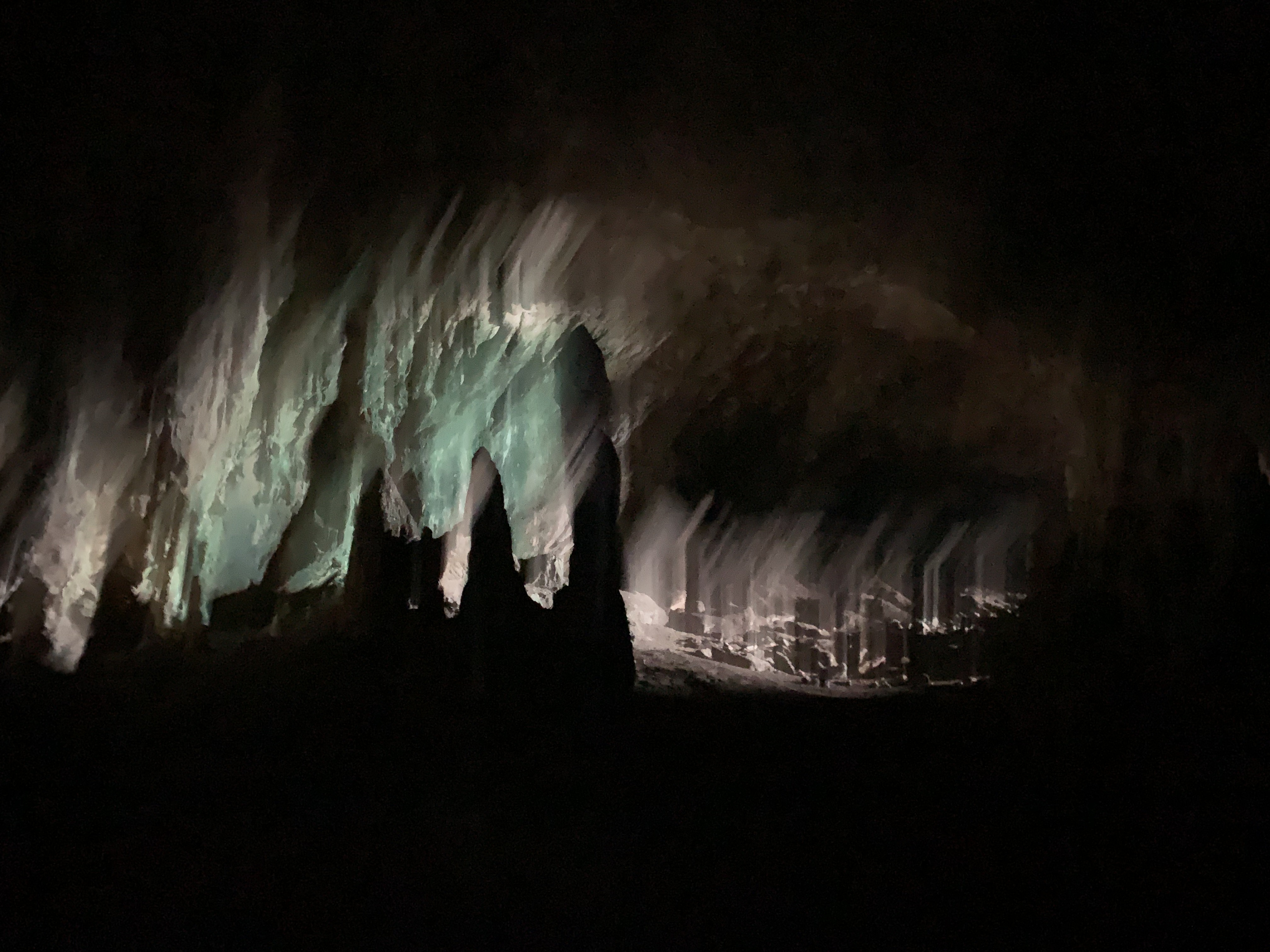
Figure 10: Cellphone camera struggles to capture what it feels like to be in Klasies Cave 3. It does, however, document the moving nature of being present in the darkness of the cave with reverberations of bats’ wayfinding echoing.
In that darkness, temporal boundaries dissolved. Past and present did not succeed one another; they overlapped. The cave functioned as a void where deep geological time and lived contemporary bodies coexisted without hierarchy or clarity. This encounter demanded attunement to uncertainty, vulnerability and not-knowing; it becomes heavier when placed alongside the history of access to the site, and our previous rejection of access to the site for the beach cleanup. This enforced separation sits outside official stratigraphies of the site, yet it is inseparable from how knowledge at Klasies has been produced. The cave holds what is excluded from authorised records: racialised labour, enforced displacement and the management of who is allowed proximity to deep time. This encounter can be understood as another speculative failure of computational intelligence. In total darkness, the cave offers no image, no dataset, no extractable signal. Vision collapses. Orientation dissolves. What remains is attunement to breath, sound and vulnerability. These are conditions under which artificial intelligence cannot operate; not because the cave is unknowable, but because it refuses translation into legible form. The cave does not store the past as information. It holds time as presence.
At Klasies, these ghosts are not confined to human bodies. They persist in caves, milkwood forests, sediments and access regimes. They circulate through sound, darkness and the slow architectures of stone. They trouble the fantasy that the past can be neatly excavated, classified or left behind (Figure 11). Derrida’s notion of hauntology helps articulate this temporal condition. Hauntology describes a world in which past, present and future are entangled rather than sequential, and where what matters is not what was, but what continues to press upon the now (Derrida, 1994). In this sense, the caves do not offer insight into origins or progress. The cave refuses both; it holds time without resolving it.
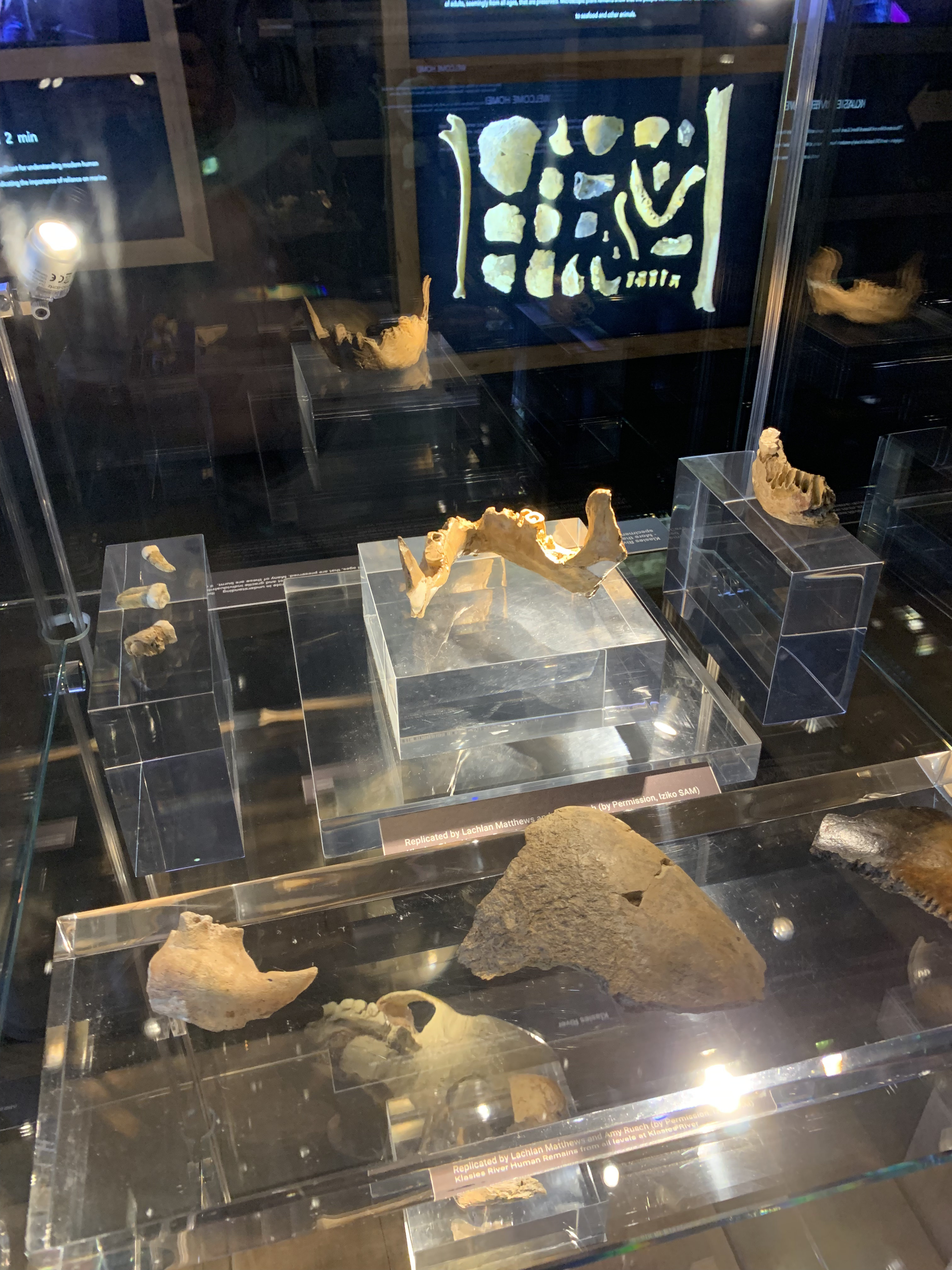
Figure 11: Klasies copies of human remains on display in the Origins of Early Southern Sapiens Behaviour Exhibition. It is both awe-inspiring and haunting to sit with another's bones and the unresolved feeling of whether this is something that should be.
This refusal stands in sharp contrast to the temporal logic of computational intelligence. AI systems privilege speed, abstraction and scalability; they promise mastery through anticipation. As critical scholars of AI have shown, such systems reproduce racialised and colonial orders of classification while presenting themselves as neutral and inevitable (Benjamin 2019). Their operation depends on extensive forms of hidden labour such as data cleaning, labelling, and maintenance rendered invisible once intelligence is made to appear autonomous (Gray et al., 2019).
By placing this embodied cave encounter alongside histories of racialised exclusion and contemporary AI infrastructures, this work insists that intelligence cannot be separated from the conditions under which it is made. Strandlooping, sedimentary making and shared labour operate as counter-infrastructures or practices that keep time open, relations unresolved and accountability in play. Against systems that seek closure, optimisation and forward momentum, haunting insists on staying with what will not settle (Motala & Bozelek 2022).
Conclusion: Reverberant Making
Rolling beads from sediment, seawater and discarded paper towels extends strandlooping beyond walking and collecting into a shared practice of making that foregrounds relation over representation. Strandlooping here is not only a coastal methodology but a way of staying with materials as they move between land and sea, body and site. Paper towels once used to clean artefacts at Klasies soften again in ocean water gathered at Buffels, carrying residues of care, labour and place across contexts. Sediment loosens, hands work slowly and knowledge/wisdom emerges through sustained contact rather than explanation.
Within this process, hydro-rugging becomes a crucial technique of attention. Soaking, rinsing, saturating and reworking materials in seawater enacts a form of cleaning that does not purify or extract, but redistributes. Unlike conservation practices that stabilise and fix matter, hydro-rugging keeps materials open, responsive and in flux. It is a way of working with water rather than against it; thus allowing tides, salinity and suspension to shape the pace and outcome of making. Together, strandlooping and hydro-rugging operate as relational practices that entangle time, material and care without resolving them into finished knowledge. The beads do not stand in for place or attempt to preserve archaeological time. Instead, they register a mode of intelligence that is situational, embodied and irreducible to data. Intelligence here is not located in the finished object. This orientation contrasts sharply with dominant paradigms of computational intelligence, which privilege abstraction, standardisation, speed and scalability. Such systems extract meaning from context, rendering knowledge legible only once it has been cleaned and separated. By contrast, the practices described here insist on proximity, duration and saturation. They resist optimisation and refuse to resolve uncertainty into discrete outputs.
The beads hold multiple temporalities: deep archaeological time carried in sediment, contemporary coastal rhythms and collaborative labour. Like reverberation, they carry time without fixing it. They do not stabilise meaning or deliver conclusions; they slow interpretation and thicken attention, offering a form of knowing grounded in care, reciprocity and responsiveness to place.
Slow scholarship thus emerges not as a counter-tempo to productivity, but as an ethical commitment to staying with what cannot easily be known. The work concludes not with resolution, but with continuation. Returning to the coastline, the sedimentary forms made during the writing of this paper are placed at the waterline in Kalk Bay (Video 6a,b). As the tide carries the forms away, the labour of making is returned to the water rather than retained as a finished object or definitive knowledge. Intelligence, here, resides not in mastery or extraction, but in return, attentiveness and release.