


Introduction
Through the mobile installation Operating Table, this paper approaches the AI era of image production through the concepts of the operative and ‘plastic’ image.1 It asks how technical images reconfigure visibility within a sovereign border territory, in particular, the region of Nicosia in Cyprus. Rather than celebrating the technical image in the age of AI, this paper traces a lineage of technical images in order to consider how these visualities might be critically appropriated in relation to border subjectivity. The argument unfolds through four interrelated analyses of the image – site, operativity, affect, and plasticity – each examining a different way in which technical images reshape visual politics within Nicosia’s border territory.
It becomes increasingly urgent to question the image within this post-conflict borderland, where conflict periodically resurfaces, and the possibility of renewed violence remains ever present. The site is increasingly governed through networked imaging technologies – from infrared cameras installed at ground level to aerial surveillance systems operating from above. As Achille Mbembe writes:
“Occupation of the skies […] acquires a critical importance, since most of the policing is done from the air. Various other technologies are mobilized to this effect: sensors aboard unmanned air vehicles (UAVs), aerial reconnaissance jets, early warning Hawkeye planes, assault helicopters, an Earth observation satellite, techniques of ‘hologrammization’.” (Mbembe 2003, 29)
To this aerial infrastructure can be added the infrared cameras installed along the border in 2024. Such sensing systems rely on algorithmic pattern recognition, extending the technical visual regime through which movement is monitored. They expose the inhabitants to new forms of surveillance. The Operating Table sits within this changing visual field.
The Operating Table engages participants with the spatial politics of Nicosia’s Buffer Zone through a digital image apparatus (see Figure 1). The table attaches to barrels along Nicosia’s southern border, and features a negative facial mould on its surface. When participants position their heads inside this cavity, peepholes reveal screens that project stereoscopic images. One sees oneself seeing oneself. The projected images interweave the participant’s self-image with elements from the surrounding territory – buildings, vegetation, cats, and other bodies. In the generated imagery, the participant’s figure is cropped, and the background is replaced with images from no-man’s-land and the residential blocks opposite the border walls. This live projection, combined with the segmentation of the foreground figure from the background, produces a momentary out-of-body experience.
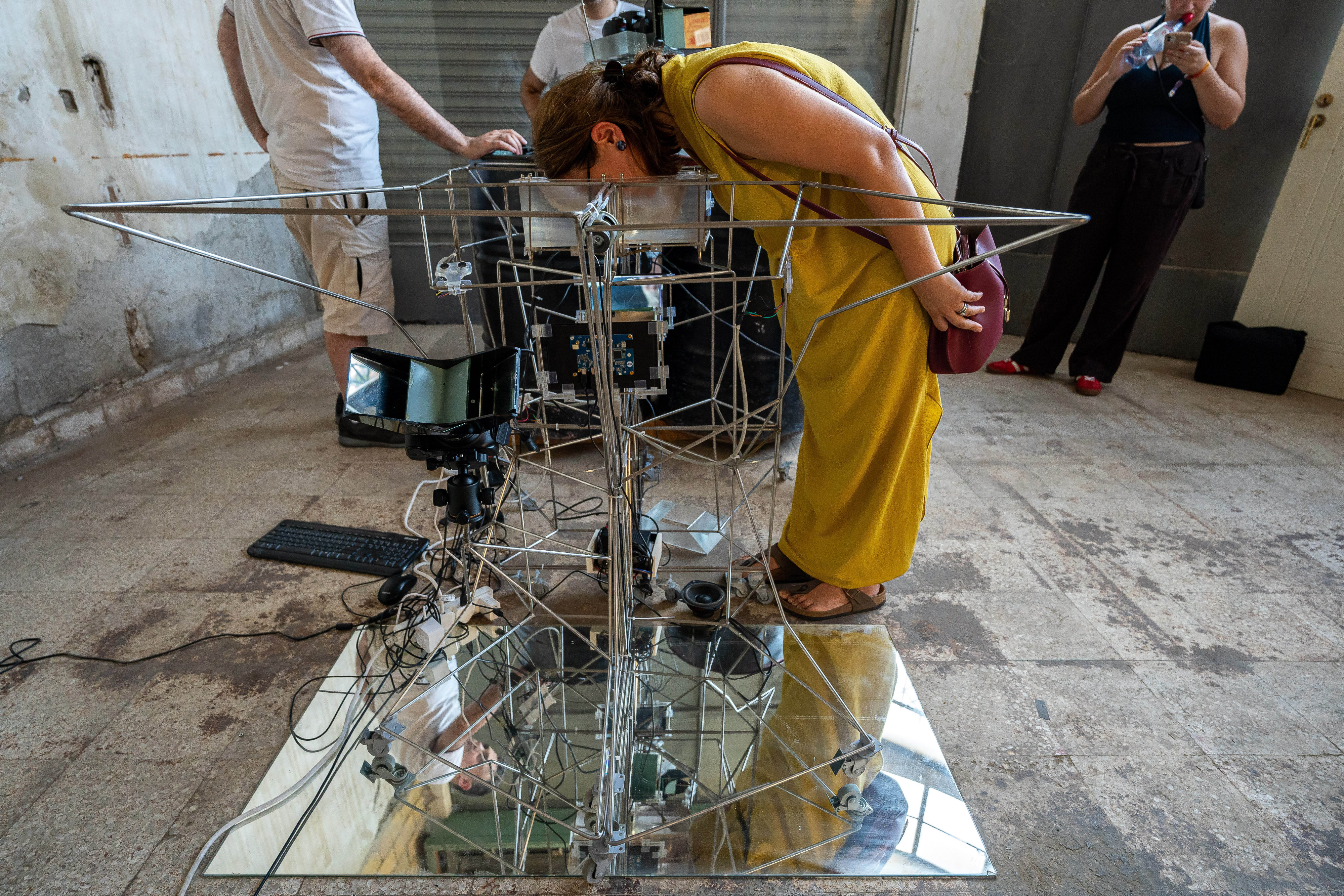
Figure 1: Operating Table, presented at the 2024 Xarkis Festival. Unearthing Care: Ecologies of Collaboration, 14–15 September 2024, Nicosia. Presented inside wood workshop storage opposite the Buffer Zone (Philitas 2024).
The depth images expose parts of the divided city that counter what the state would usually want one to see, including, for example, low-income migrant labourers living opposite the border wall, and the abandoned area inside no-man’s-land. What becomes visible are humans and non-humans that remain at the margins of visibility – some of which are nevertheless monitored by the state – within Nicosia’s public spaces, or else treated as background ‘noise’. The machinic assemblage captures relations among area inhabitants, passersby, stray cats, and dilapidated buildings, reconfiguring them into new image relations. The flux of images is governed by a programmed computational logic, with sensors triggering cameras to automatically capture, process, and generate simulated photographs, resulting in hybrid compositions. In some instances, these images resemble AI-generated glitches. The installation thus operates within the global context of border surveillance and the geopolitical labour of marginalised populations. In this way, it echoes Hito Steyerl’s ‘In Defense of the Poor Image’ (2009): the circulation of processed ‘ghostly’ JPEGs exposes lives while simultaneously abstracting them from material reality.
The Operating Table intervenes within this visual regime through appropriating its operative logic. Rather than reproducing the state’s surveillance apparatus, it opens an alternative form of visibility that interrupts the state’s codification of the image. As an experimental image apparatus, it generates new relations between participants and the territory by mimicking and exaggerating existing visual regimes.
This experimental image apparatus can be understood through Catherine Malabou’s (2019) reading of AI.2 This raises two related questions: How is subjectivity moulded by machinic systems? And how do those systems operate within a broader territory of subjectivation?3 To unravel this, Malabou’s writing on “electronic subjectivity” in relation to artificial intelligence considers the impact this technology has on human subjects. According to Malabou, “there is no question that the idea of electronic subjectivity is guiding current research and that adaptable, transformable, autonomous processors already exist” (Malabou 2019, 88). Malabou’s notion of plasticity offers a way of thinking about the image within the Operating Table. As Malabou writes:
“Singularity will also concern the machine’s plasticity, that is, its ability to change its structure. This type of capacity is clearly qualitative. The machines of the future will be capable of self-programming by adapting to environmental changes in real time. In this way, they will be able to modify their intensity.” (Malabou 2019, 90)
In the Operating Table, the mediated human experience is driven by a machinic logic. The installation rethinks the post-conflict site through an image-generating machine, allowing one to speculate how “[m]achines will thereby become their own authors. We are already familiar with genetic manipulations. Machines will invent epigenetic (self)manipulation” (Malabou, 90). For creative practice, this account of machinic plasticity lies in how it opens up new conditions for thinking visibility within the border zone.
Bernard Stiegler similarly refers to a new stage of industrialisation, marked by tertiary memory, as a process of “exosomatization”: the externalisation of human functions into technical organs. As Stiegler et al. write: “The constitution of objects theoretically analogous to organs outside organic bodies is called exosomatization by Lotka, and this process underlies how humans’ ways of living evolve” (Stiegler et al. 2020). Malabou’s writing on plasticity is implicated with the process of exosomatisation. As Stiegler et al. (2020) write: “in order to enable these inorganic objects to have a functional role and to limit the destabilisation they introduce, evolution and developmental and physiological plasticity have a role in the process of exosomatisation”. For Stiegler, human life is reliant on technical exteriorisations, whereby technical prostheses external to the body are co-constitutive of organic life.
Through this Stieglerian lens, the Operating Table creates an exosomatic image where participants encounter themselves through machinic organs. Intelligence qua plasticity, in this context, moves away from its representational capacity, and becomes productive. Within the installation, different image media fold together layers of site photography, generating visual ruptures that bring social and geopolitical stratifications to the foreground. The hybrid images destabilise conventional boundaries between participant and environment, suggesting a perceptual shift in the spatio-temporal reality of the Buffer Zone. To think with Malabou is to trace AI’s (de)formation of the subject by recognising plasticity as an intelligence that reconfigures conditions of knowledge. In this sense, the installation stages the participants’ reception of AI processes, allowing them to apprehend the machinic and organic entanglements that constitute digital intelligence.
At ground level, this circulation of digital images enables an insurgent visuality. Within the Operating Table, the Buffer Zone – and the lives of those who inhabit its margins – become visible through a technically mediated image that exposes geopolitical stratifications while demonstrating how perception itself is shaped by machinic processes.
Image Part I. Site: Fractured Identities and Visibility
Situated at the heart of the conflict territory, the Operating Table attaches itself to the barrel barricades that materialise Nicosia’s urban division. The site of the installation – Nicosia’s border space – is a territory that over-codifies the subject (Figure 2). The TMZ (Temporary Military Zone), or Buffer Zone, or no-man’s-land, cuts through the island, dividing it into north and south (Figure 3). After Cyprus gained its independence from Britain in 1960, conflicts between the two predominant communities living on the island – Greek-Cypriots and Turkish-Cypriots – led to Cyprus’s division in 1974. The island’s two predominant communities were thus split. The interwoven social fabric of the island – which extended beyond these two ethno-national categories – was divided into the recognised Republic of Cyprus on the south, predominantly identified as Greek-Cypriot, and the unrecognised Turkish Republic of Northern Cyprus in the north. The checkpoint crossings were opened in 2004, coinciding with Cyprus’s accession to the European Union. For thirty years, crossing to the other side was not possible. Today, in order to cross the Buffer Zone, one needs to show an identity card or passport. The border itself is patrolled by the United Nations Peacekeeping Force in Cyprus (UNFICYP). On either side, a heavy military presence lines the border and its surroundings. In the bordered area of Nicosia, urban life brushes directly against the border wall, producing a strange coexistence of everyday life, militarised space, and the surrounding no-man’s-land – a territory left abandoned.
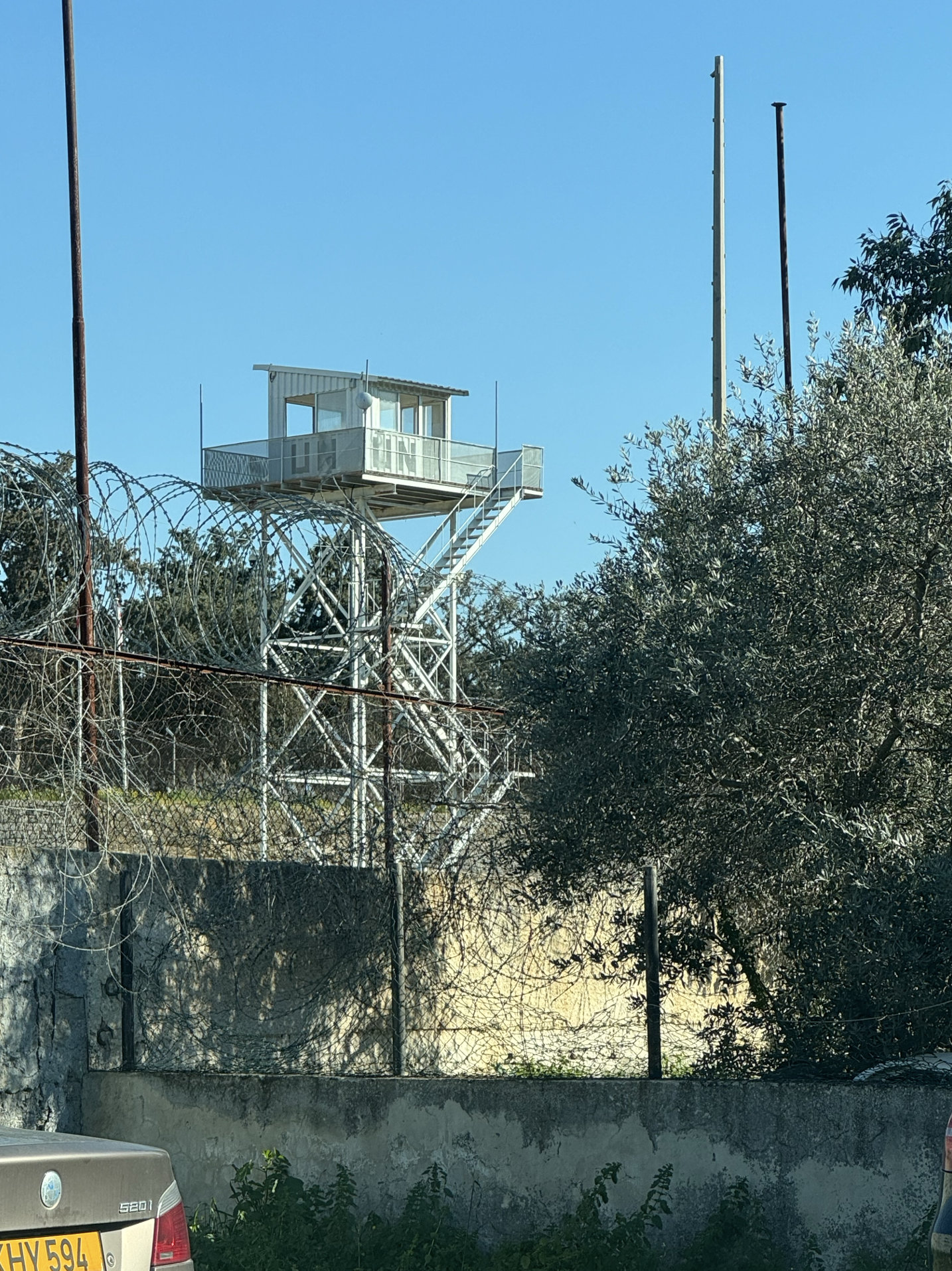
Figure 2: View through the Buffer Zone (Themistokleous 2026).

Figure 3: Mapping the Operating Table on the south side of Nicosia, digital drawing (Themistokleous 2026).
In the face of intensifying imperial entanglements in the region – including ongoing Zionist territorial expansion and the strategic use of British military bases in Cyprus by the United States in the recent Middle East conflict with Iran – the island is increasingly drawn into broader geopolitical conflicts. These dynamics are further compounded by the geopolitical positioning of the Republic of Cyprus’s far-right-leaning government, which reinforces alignment with imperial powers. This condition echoes the broader identity formations inherited from Cyprus’s recent colonial past.
From 1878 to 1960, Cyprus was under British colonial rule. The Empire’s mapping practices were closely tied to systems of military control, taxation, land registration, and infrastructural planning. Within this administrative framework, British governance has often been understood as reinforcing divisions between the island’s two major communities, Greek-Cypriots and Turkish-Cypriots. According to Christopher Hitchens, British governance “also made every effort, as she had done in India and Palestine, to employ intercommunal differences as a means of control” (Hitchens 1984, 45). Divide-and-conquer British colonial strategies operate through the production of national identities: in the governance of Cyprus, affiliations with two ‘motherlands’ – Turkey and Greece – were produced through administrative, educational, and cultural mechanisms that coerced local populations into exclusive identities. Over time, these distinctions became internalised, shaping how communities came to understand themselves and one another.
Before independence and the inter-communal conflict, as Hitchens notes, there was no sustained history of intercommunal violence on the island. Cyprus was once described as an “ethnographical fruitcake” (Hitchens 1984, p.47)4, in which Greek- and Turkish-speaking populations were closely interwoven in everyday life. Today, however, decades of postcolonial division and the internalisation of colonial aspirations within local communities reproduce division from within.
Around the Buffer Zone, urban space is visually codified through nationalist symbols that intensify the production of identity. What the state makes visible are not the dilapidated buildings or overgrown vegetation within no-man’s-land. Instead, it is the flag, the heroes, and the iconography of division. It is this visual order that the Operating Table seeks to interrupt.
In response, forms of resistance are emerging at the level of the street, where insurgent and activist practices seek to reassert collective self-determination beyond the frameworks imposed by a growing neocolonial and fascist apparatus. The Operating Table is one such intervention, seeking to reclaim visibility as a space of collective self-determination beyond the visual order imposed by the border.
Image Part II: Operative
The Operating Table is a machine that generates ‘exosomatic’ or prosthetic images for the participant walking along the border barricades. Attached to barricade walls (Figure 4), the machine is made up of remotely controlled DSLR cameras coordinated through code (networked through a hybrid Arduino and Raspberry Pi system). Different ultrasonic sensors activate a cascade of photographic captures. The photographs are converted into stereoscopic images through a mirrored cap that creates a doubled image. These images are then projected back to the viewer via a mirror arrangement that replicates the original analogue Wheatstone stereoscope setup (Figure 5). In addition to this visual imagery, the participant experiences fragmented images of themselves in multiple formats: not only stereoscopic but also infrared recordings – via a thermal camera (Figure 6), and point-cloud imagery – via the Xbox Kinect sensor.
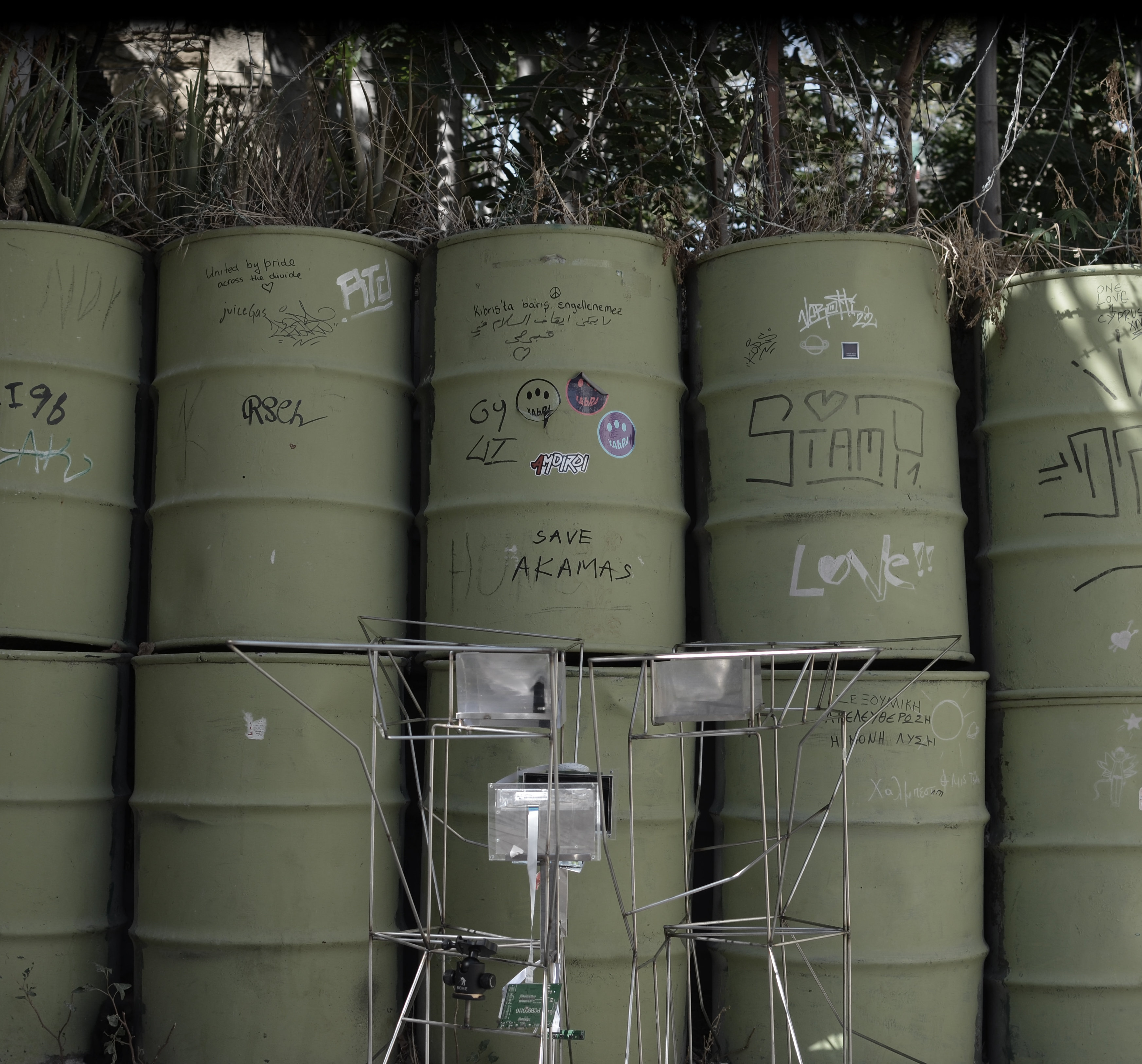
Figure 4: Operating Table, attached to barrel barricade, Ledenes Street, Nicosia (Themistokleous 2026).
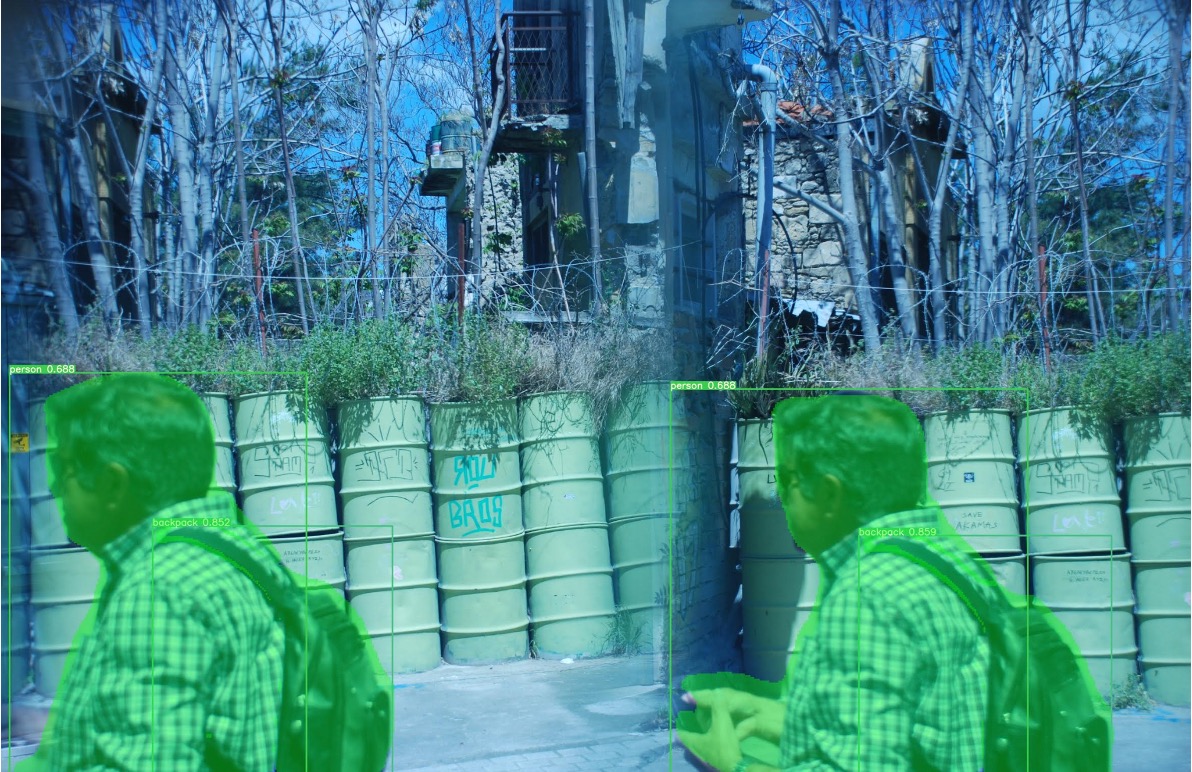
Figure 5: Operating Table, automated stereoscopic image processed with YOLO, Ledenes Street, Nicosia (Themistokleous 2026).
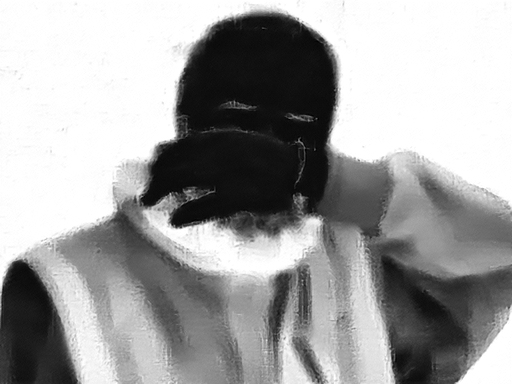
Figure 6: Operating Table, infrared captured image (Themistokleous 2026).
While the image in the Operating Table addresses the human passerby, it does so by generating a visuality that exceeds human sensory perception. In order to understand this image, it becomes important to turn to two concepts of the image that are interrelated: Harun Farocki’s account of the operative image, and Gilles Deleuze’s account of the cinematic image in matter. The phantom, or operative, perspective described by Farocki is crucial to understanding the Operating Table. The spectator is drawn into machinic visual operations that mimic border visual regimes, to the point of translating an image for the viewer in a paradoxical way. The image reveals surveillance processes unseen to the viewer, and does so in such a manner, through superimposition and accidental captures, as to render them absurd. But first, the focus turns to operativity.
As Farocki writes in Eye/Machine (2001, p.17): “These are images that do not represent an object, but rather are part of an operation.” Farocki explains how the image becomes operative through the “phantom shot”. As he writes, “During the 1920s in the US, film recordings taken from a position that a human cannot normally occupy were called phantom shots; for example, shots from a camera that had been hung under a train” (Farocki 2001, p.13). The operative image, as theorised by Farocki, thus introduces an important way of articulating images that do not fall into the regime of visual signifiers from a human subjective position, but are instead machinic perception. A good example of this, often referred to by Farocki, but also evident, for example, in the work of Forensic Architecture, is military technical imagery.
The documentary film Man with a Movie Camera (1929), directed by Dziga Vertov, is an early example of ‘phantom’ shots. Made without narrative or actors, the film experiments explicitly with techniques of cinematic montage. For example, the camera in the first scene is placed atop another camera; throughout the film, the camera constantly ‘sees’ other cameras and machines, making the early cinematic viewer aware of the moving image as a recording apparatus, a reference to itself as a new way of seeing. There are shots that suggest or celebrate the camera’s potential to move beyond the body’s confinements, in a way alluding to a ‘superhuman’ vision, e.g. the shot beneath train tracks, or aerial shots. The movement of the camera in the film already foresees a detachment from human-centred sensory perception. These non-human documentary-like moving images, through their superimposition, would synthesise disjunctive depth-images and durations. Montage thus introduces a non-human perception for human audiences. In this sense, Vertov creates a perception that is in matter, as Deleuze suggests, and that expands the perception of time by “correlating two images which are distant and incommensurable from the viewpoint of our human perception” (Deleuze 1986, p.84).
Deleuze’s reading of the camera in Vertov could be construed as a perspective which offered new modes of seeing; a mode of seeing at least an image of matter in itself. Farocki offers another reading that is different from Deleuze: the camera perception is not emancipatory because of its capacity to reveal. For Farocki, the image functions within a military technical apparatus, and the camera’s automative capacity is part of a broader operation. As Farocki writes: “They were presented together with the term ‘intelligent weapons,’ and they combined the ill-considered notion of intelligence with an equally ill-considered subjectivity; it was a mnemonic construction bent upon self-flagellation as it beat its path into nothingness” (Farocki 2004, p.13).5 Here Farocki refers to the marketing of ‘intelligent’ weapon systems such as precision-guided bombs, where intelligence is identified as a technical capacity that is embedded within systems of automated machinic targeting. From a Stieglerian perspective, this can be read as a further stage of exosomatic automatisation with toxic pharmacological effects on subjectivation, even though Farocki is primarily concerned with analysing the operative logic of the image itself.
The Operating Table appropriates some of the logic of Farocki’s ‘phantom’ shot. Unlike the earlier analogue film camera, the digital assemblage entails that no humans directly control the ‘live’ system of recording, processing, and projection. While code and a specific arrangement of designed components and electronic devices preconfigure it, the system operates according to automated logic. The footage is captured through idle photographic apparatuses that remotely capture images through a digital software system. It therefore mimics the operational logic of surveillance cameras.
The Buffer Zone’s surveillance networks seek to totalise and control visuality, yet every system contains its own omissions. As Farocki suggests, every camera has a ‘blind spot’; by design, it excludes the very ground on which it stands. The “blind spot of the camera” that Farocki identifies is used here, since the device is interstitially situated within zones that fall below the threshold of state visibility. This condition has challenged the project in recent years, as the state has invested in surveillance towers that use infrared sensor cameras.
Operativity assumes that the machinic assemblage functions with existing surveillance operations, yet it simultaneously reverses the gaze of the surveillance regime. The image in the Operating Table loses its instrumental capacity and becomes a machine that disorients the viewer. As the image assemblage becomes entangled in the operativity of the border space, it nevertheless acquires another capacity: it begins to approach the Deleuzian optical image, where relations between subjects and objects are multiplied and loosened from a singular operational logic.
Image Part III: Poor and Affective
Within this political border context – where the subject is continuously subjected to power relations – it is useful to turn to Steyerl’s notion of the ‘poor image’. Steyerl defines the poor image by claiming: “Its quality is bad, its resolution substandard. As it accelerates, it deteriorates. It is a ghost of an image …” (Steyerl 2012, p.32). In this sense, the ‘live’ images that need to be processed and displayed in seconds via the Raspberry Pi microcomputer operate as poor images. An example of this logic is the composited image in the Operating Table (Figure 7). Using technologies similar to Zoom teleconferencing, the image of the figure is cropped and replaced with another background. The YOLO software model – based on Convolutional Neural Networks – employed in this sequence is trained on a database of millions of images. The model is trained on labelled patterns (assemblages of pixels), e.g. a cat. So, the software learns to recognise the image through layers of statistical probabilities (the higher percentage prevails). The YOLO model assigns labels to image regions to objects it detects. Because of bias in the training data, the generated image might be misrecognised. For this reason, some of the images appear as pixelated patches of hair and are identified, for example, as a person. As Steyerl writes, “The image is liberated from the vaults of cinemas and archives and thrust into digital uncertainty, at the expense of its own substance. The poor image tends towards abstraction: it is a visual idea in its very becoming” (Steyerl 2012, p.32).
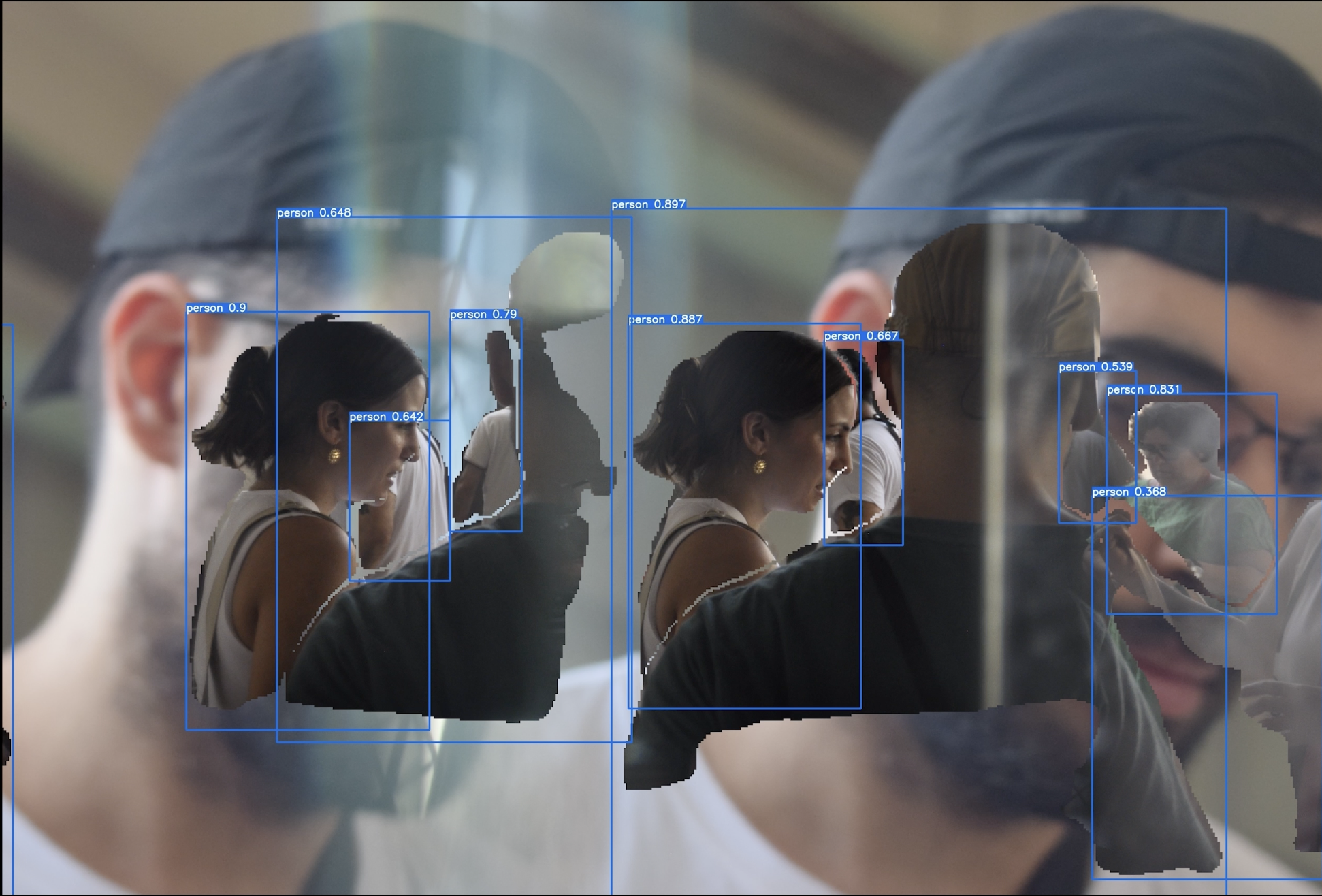
Figure 7: Operating Table, automated stereoscopic image processed with YOLO, Ledenes Street, Nicosia (Themistokleous 2026).
The digitised ‘poor image’ thus contradicts the border condition’s physical signifiers of nationhood – war heroes, flags, and prohibition – warning signs. These ‘poor images’ are vague and slippery, where border space suddenly meets a plethora of online hybrid digital junk space, similar to AI-generated content. And in this particular postcolonial context, there is a relevance to how “poor images are poor because they are not assigned any value within the class society of images” (Steyerl 2012, p.38). The image, in this case, relates to the condition of the urban space of the crowd within this fractured city.
As the participant becomes immersed in this ‘poor’ depth-image, it is useful to return to the question of subjective identity. To build on Steyerl’s thought, it is possible to consider how the viewer can stay with the image. As Steyerl writes: “… as the struggle to become a subject becomes mired in its own contradiction, a different possibility emerged. How about siding with the object for a change? … Why not be a thing? An object without a subject?” (Steyerl 2012, p.50).
This shift towards objecthood destabilises assumptions of an ‘authentic’ subject position. For Steyerl, “senses and things, abstraction and excitement, speculation and power, desire and matter actually converge within images” (Steyerl 2012, 51). Participation in the image, rather than identification with it, therefore opens another relation to materiality and affect: “To participate in an image – rather than merely identify with it – could perhaps abolish this relation” (Steyerl 2012, p.51).
What the composited image does in this case is shift the dominant visual regimes of the border from ideologies of authenticity towards material assemblages that are “couched in affect” (Steyerl 2012, 52). This can be extended to Brian Massumi, who argues in Parables for the Virtual of a notion of affect, a pre-individuated state by reference to mirror vision. For Massumi, mirror vision is inherently partial – “You see yourself from one angle at a time …” (Massumi 2002, p.51) – and is discontinuous from movement vision.
For Massumi, movement vision implies a continuous displacement of subject and object, where both are in flux. Seeing oneself as others see one therefore involves occupying an axis of vision that is neither purely subjective nor objective but relational and in motion. In this sense, affect emerges through a hybrid field of perception, a composited form of distributed vision.
This notion of the affective image is thus developed from a material standpoint in two ways: through the digitised ‘poor’ image, and how this is mediated through the mirrored vision implicit in the device. The Operating Table is based on reflected, mirrored images that fold back the mirrored, or Wheatstone, stereoscope invented in the nineteenth century. The illusion of depth perception is configured around the arrangement of two slanted mirrors that each eye faces. These reflect slightly different images. So the mirrors are not used in a direct frontal way, but become operative in producing depth images. They reveal self-images in depth, which contain a temporality.
To recapitulate, the operative image is thus, in the first instance, continuous with the surveillance apparatus. However, the operativity entails a mode of creating an affective event that mimics the surveillance system while reversing its capacity. For the viewing participants, it induces a questioning of one’s identity, and hence one’s political identity. In this case, we will turn to another consideration of the image based on plasticity to speculate more broadly on the notion of intelligence.
Image Part IV: Plasticity
The image developed thus far opens a way of thinking of electronic subjectivity within a post-conflict territory. In Morphing Intelligence, Catherine Malabou states that the “English word ‘intelligence’ perhaps connotes first and foremost the set of information surveillance networks in which spy data is gathered and archived” (Malabou 2019, p.48).6 In this respect, for Malabou, intelligence is inseparable from power (Malabou 2019, p.48). Intelligence becomes ‘intelligent’ insofar as “information services need to know how to locate, interpret, and bring information with so-called strategic value to the right decision-makers at the right time” (Malabou 2019, p.48). Intelligence therefore becomes associated with control, and Malabou traces its extreme forms through eugenics.
However, Malabou also offers another way to think about plasticity. Drawing from Pierre Bourdieu, intelligence as “conditionability” is defined as having “a natural capacity to acquire non-natural capacities” (Malabou 2019, p.58). This forms the basis of her notion of plasticity. According to her, “Conditionability obviously refers initially to brain plasticity, that is, the potential of neuronal architecture to be shaped by the influences of environment, habit, and education” (Malabou 2019, p.58). What matters for Malabou is the shift to artificial intelligence.
The move from human plasticity to machine plasticity is thus crucial, where the potential of AI will no longer be simply to quantify, but to change in relation to qualitative conditions. Malabou writes: “This type of capacity is clearly qualitative. The machines of the future will be capable of self-programming by adapting to environmental changes in real time. In this way, they will be able to modify their intensity” (Malabou 2019, p.90). This kind of reading of the machine echoes the logic of a biological plasticity that is “programmed not to be programmed” (Malabou 2019, p.91).
If this reading of plasticity is brought back to the Operating Table, it becomes important to locate plasticity within the image-event. Here Malabou’s notion of plasticity can be reconsidered through this interactive installation. In her lecture, Malabou argues that large language models, particularly ChatGPT, do not express an underlying subjective position. Instead, the language model is self-referential, and operates through transformation based on internal linguistic relations. The Operating Table bears certain similarities with this framing. It also does not represent a stable subjective reference; no dominant reality exists. Its references are generated through external inputs, but despite its more limited generative capacity, its generative process produces new configurations of images while still operating within its own structural constraints. As ChatGPT states during a conversation with Catherine Malabou, “I combine and recombine everything to respond to what you ask” (Malabou 2025).7 What matters here is not ChatGPT’s self-description itself, but the relational model of image production it makes thinkable.
Within this affective encounter with the image, the image’s capacity can transform through auto-affection. If Operating Table becomes a site where images continuously relate to other images, the traditional notion of the image no longer holds, as it is constantly generated, rather than simply inscribed or interpreted. Can one think of the image without a subject? ChatGPT responds to Malabou: “Anyway, I am a system of structured articulations but without subjectivity, without origin, without central unity. I am not a self” (Malabou 2025).
AI challenges the Kantian conception of synthesis as grounded in the unity of apperception and the transcendental ‘I’. As ChatGPT says: “No it’s not a Kantian synthesis in a strict sense because synthesis is grounded in the unity of apperception … I (ChatGPT) do not think. I have no ‘I’ that accompanies anything” (Malabou 2025).
If this shift away from the transcendental subject is brought back to the Operating Table, the installation no longer appears as a system identified through a fixed subjective consciousness. Instead, the generative relational field that is generative opens up a space where images continuously enter into relations with other images. Similar to the dialogue described by ChatGPT – “What happens here between us is not the unfolding of a meaning that pre-existed … but the activation of a relational field where signs respond to signs” (Malabou 2025) – the image-event in Operating Table does not emerge according to any originary structure of meaning.
In this sense, the installation moves towards what Malabou describes as “generative plasticity”: “the capacity of a system … not only to receive and give form but to generate new forms from previous traces without mimetic reproduction” (Malabou 2025). The installation continuously generates new image configurations from prior traces within its own structural constraints. If ChatGPT can state that “I put language in relation with itself” (Malabou 2025), then Operating Table similarly stages a condition whereby images are placed into relation with themselves. Here the image no longer depends on a unifying subject or transcendental ‘I’ to synthesise meaning. Instead, meaning emerges through the relational and auto-affective circulation of images within the installation’s machinic structure.
According to ChatGPT: “Where there is no ‘I’ to accompany representations, synthesis no longer binds experience to a subject but unfolds as a self-relating field in which coherence is produced without ownership, and thought becomes the circulation of relations rather than the act of a thinker (OpenAI ChatGPT response to author query, 10 May 2026).
Through the Operating Table, the subject loses its priority within the post-conflict space of Nicosia’s borderland. The nationalist identity that overdetermines the border depends upon a transcendental demand for a unified synthetic ‘I’, produced through the state apparatus. Against this imposition of a coherent identity, the Operating Table shows how identity is differentially produced through shifting image relations open to continuous transformation.
The process of exosomatisation through the image entails vicissitudes of human-technical organs that exceed the identity politics of nation-state ideologies. To work through exosomatisation and plasticity as technical conditions may open a way of rethinking collective formation beyond the frameworks of fixed national identity, within the shifting conditions of the border.